Capture the splendor and magnificence of Antarctica’s wildlife and landscapes!
The Antarctic Peninsula will captivate you in ways you never thought possible. The ice, the wildlife, and the light are magical. Our experience has yielded some great lessons.
Camera Support
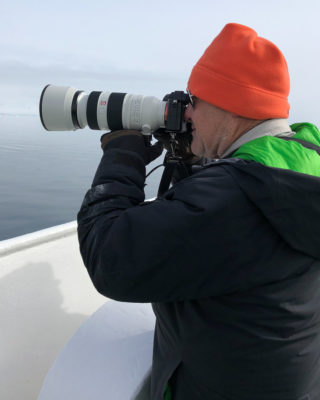
Because you’ll be shooting in daylight, you won’t need a tripod. This means you don’t need to lug it onto the plane, through customs, or on every excursion. And you will be free to compose on the fly without setting up the tripod before clicking the shutter.
When I’m working in an environment with many moving parts—icebergs, penguins, light, and myself in a boat, I find working handheld to be far more rewarding and fun. Today’s great zooms like 100-400mm, 200-500mm, and 150-600mm make this easy. If you are looking to support a larger lens, a monopod could come in handy.
Exposure
Exposing correctly for bright light and reflective surfaces, such as snow and ice, can be tricky, even on cloudy days. Set your camera meters to “evaluative metering,” meaning the entire scene from corner to corner will be considered. However, even this setting can be fooled, such as with bright snow or ice. All cameras and light meters are calibrated to middle grey. So you will often need to override the camera meter and “overexpose” so that the snow is white, not gray. When you do this, it’s essential that you don’t overcompensate, which could lead to blown-out highlights. Check your results by using the “highlight warning” (the “blinkies”) setting.
Focus
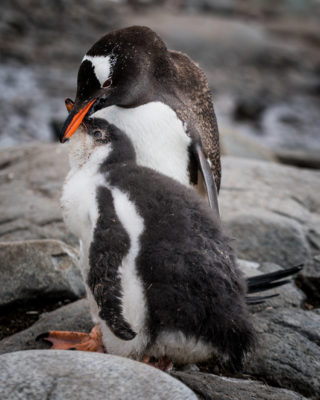
When capturing wildlife images, it’s best to use a focus setting called “continuous focus,” which allows the camera to track focus on the subject while it moves, whether it’s a penguin or whale. Your job is to continually press down halfway on the shutter button before releasing the shutter. If you’re using “back button focus,” then you’re pressing the AF button on the back of the camera in addition to the shutter. It’s best to use a group of focus points somewhere in the center of your frame. Position those focus points on the subject, or move them around the frame as your subject moves.
Stability
When you’re holding your camera, be sure to be as comfortable as possible, with one hand on the camera body, another under the lens, and your eye pressed up against the eyepiece. Using built-in image stabilization for your camera or lens is also essential. Finally, a faster shutter speed will maintain sharpness by freezing the movement of the wildlife. With the plentiful amount of light in Antarctica, this is never a problem.
Composition
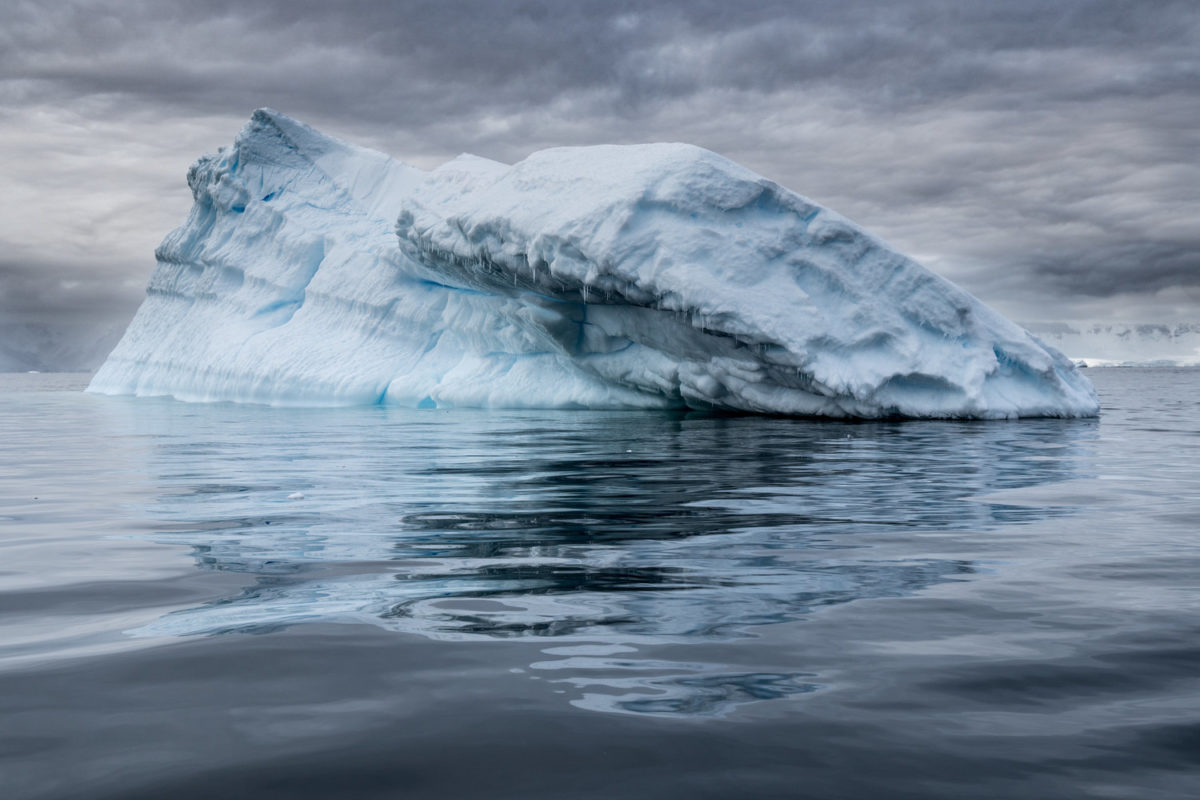
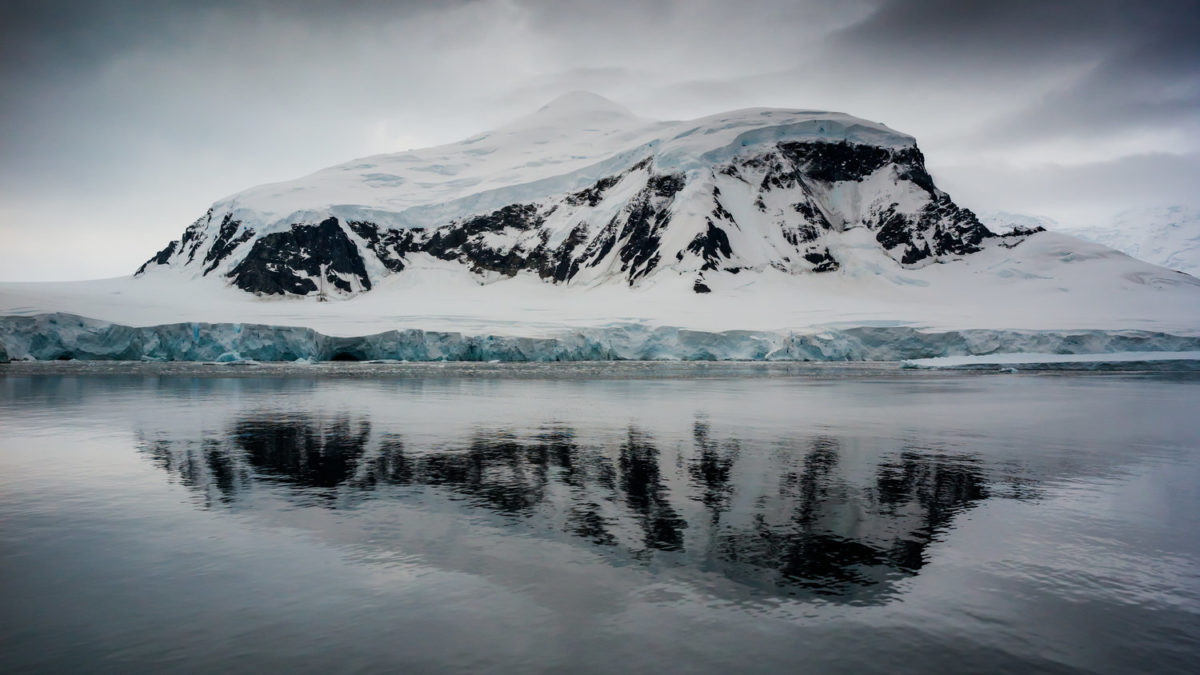
Composing fields of ice, hundreds—and sometimes thousands—of penguins, and mountains covered in ice, is challenging. In this environment, it’s best to isolate specific subjects from the larger landscape, such as one lone penguin or a crevasse in a glacier. By doing this through the lens, you’re selecting something special from the mix. If you focus on finding these isolated subjects and add some interesting light to them, you will begin capturing unusual compositions that many never noticed.
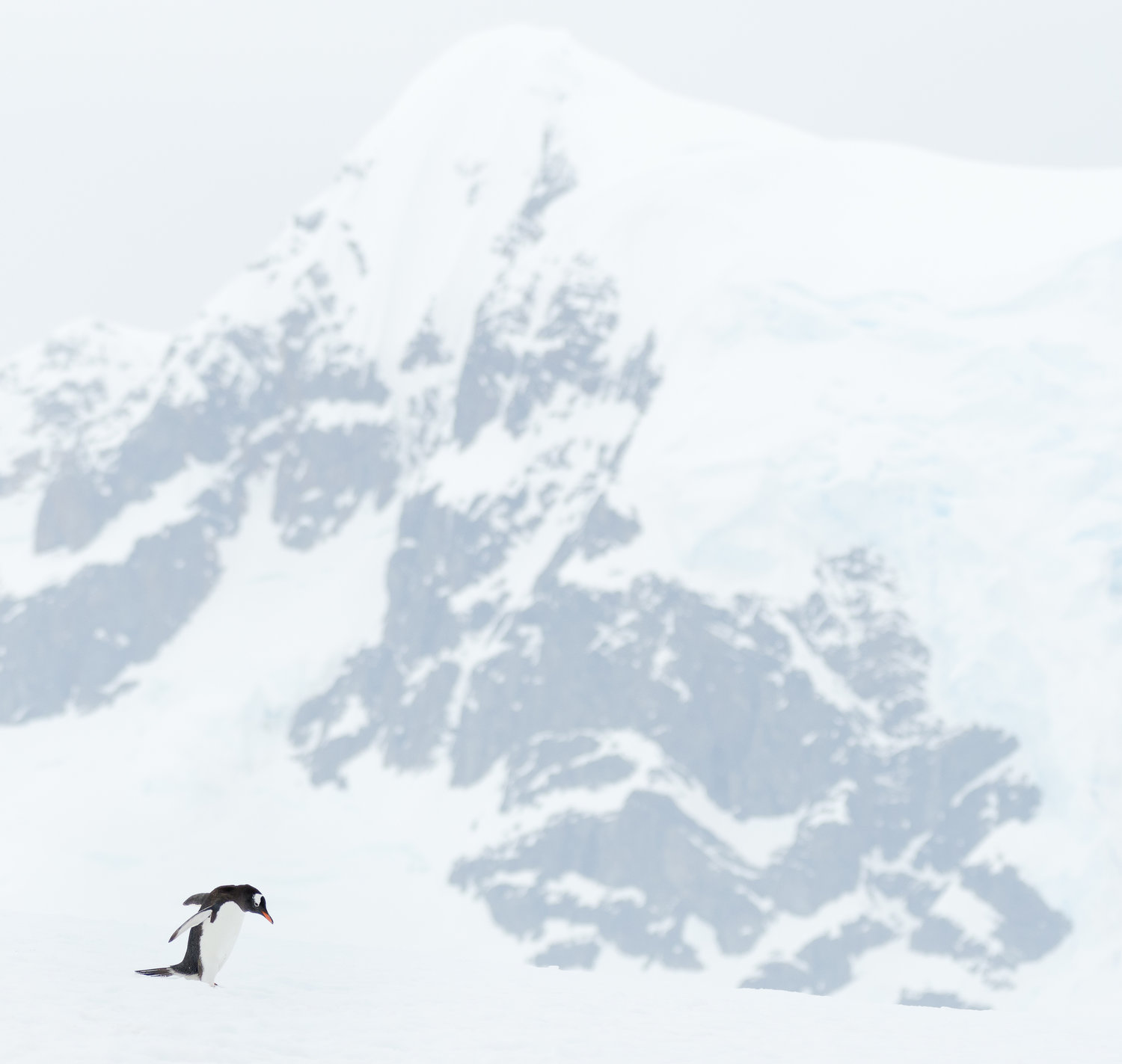
Antarctica has endless opportunities to capture unique images of landscape, wildlife, and even travel scenes. Be sure to capture images in focus and try different things like getting low or using motion blur or shallow depth of field. Most importantly, be creative with the camera, make mistakes, and learn from them to grow in ways you didn’t think were possible.