The Grand Canyon is undisputedly one of America’s most iconic visitor destinations. Every year, millions of people line up along the South Rim of Grand Canyon National Park in northern Arizona to get a glimpse of the UNESCO World Heritage Site.
Many start at Mather Point, one of the most popular viewpoints, especially for first-timers, where crowds gather on the viewing platform at sunrise, cameras raised. Others make for Hopi Point, famous for sunset, or climb the Desert View Watchtower, for one of the highest views on the South Rim. From up there the Colorado is a thin ribbon far below.
But for Ed Hasse, who had been up at the edge with friends just the day before we spoke, the view from below is a different thing altogether.
“At the rim, you’re just looking at this vast expanse. You don’t understand the size and depth of it till you step below the rim, and traveling through it on a river trip is your best way to really experience the Grand Canyon. It’s a whole different world down there.”
How it Started
Ed Hasse is a legend among river guides. Next year will mark 50 years (yes, you read that right) since he first started guiding people down the Colorado River.
“I started boating in 1977,” he says, speaking from his home in Flagstaff, Arizona. “I spent six years in Utah and then I discovered the Grand Canyon in the fall of 1982. I’ve been a permanent figure down here ever since.”
Today, he lives just minutes from the warehouse for Arizona Raft Adventures (AZRA), the third-generation, family-run company he guides for and Muench Workshops outfitter of choice on the river.
Ask anyone who has traveled with him and you’ll hear the same thing: Ed is unforgettable. Guests from across the decades still speak fondly of their trips, and for many, those days on the river have become some of their most treasured memories.
Ed’s first experience of the Grand Canyon from below was a private excursion with a few friends. Armed with a permit allowing just 18 days of travel, they worked out that the park’s last patrol trip of the season would in fact pass them fairly early on, so they packed extra food and, as he puts it, “cheated,” turning 18 days into 32.
“That’s what set the hook for me,” Ed says. “I’ve been having a love affair with the Grand Canyon for over 40 years. I can’t get enough of it.”
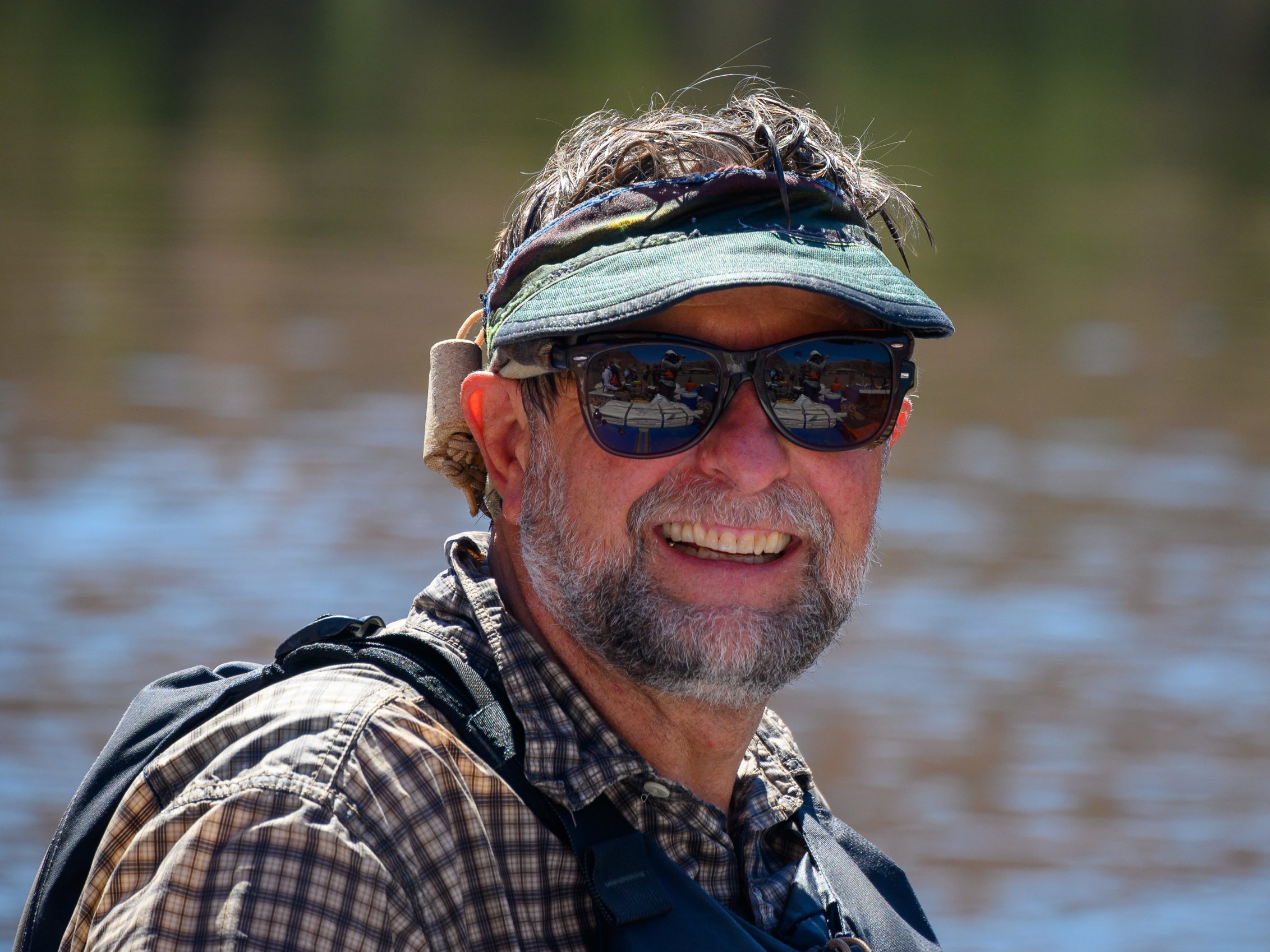
AZRA guide Ed Hasse.
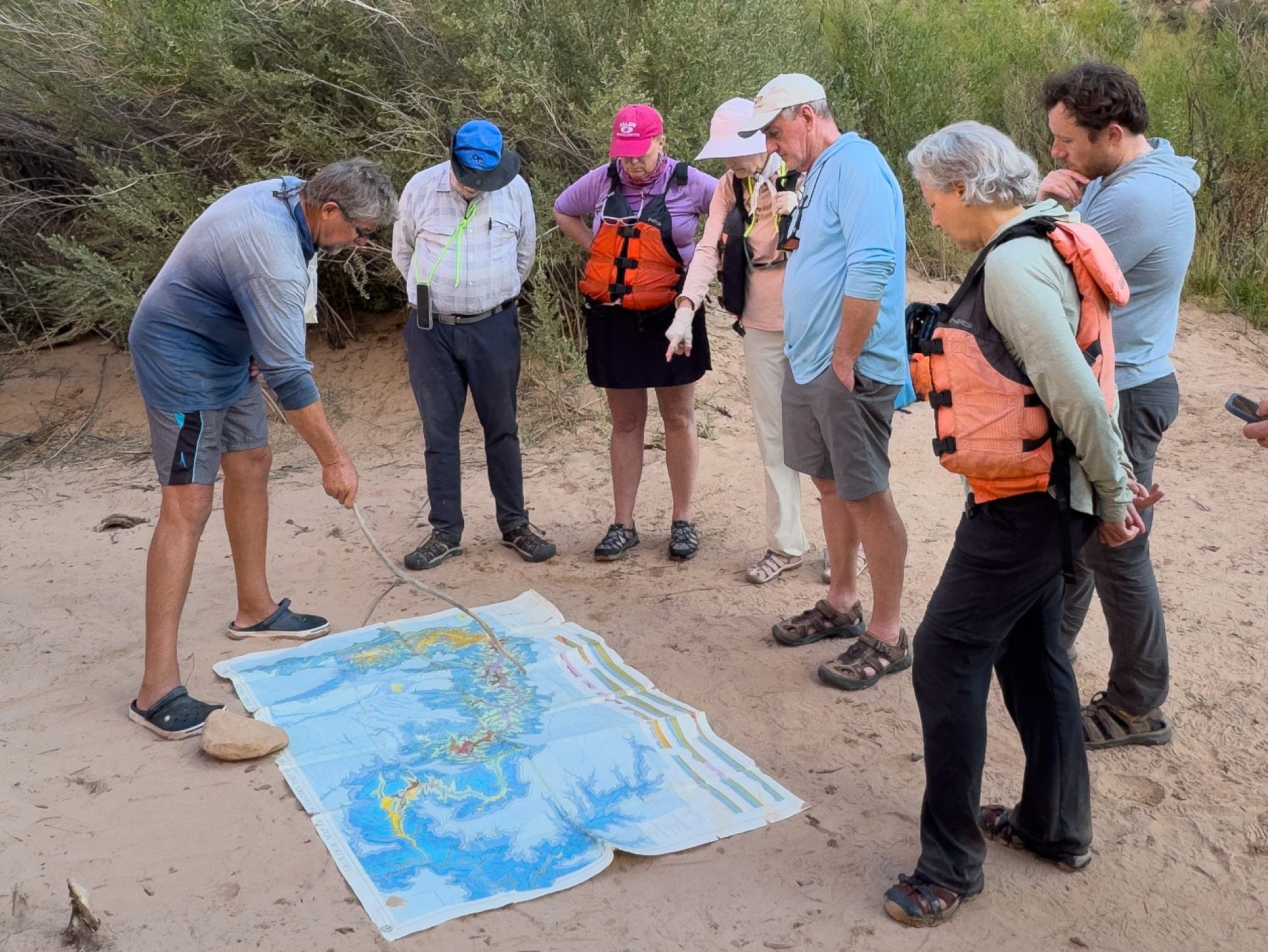
Ed's map of the Colorado River.
Ed showing the day's plan on the river.
Chasing the Light
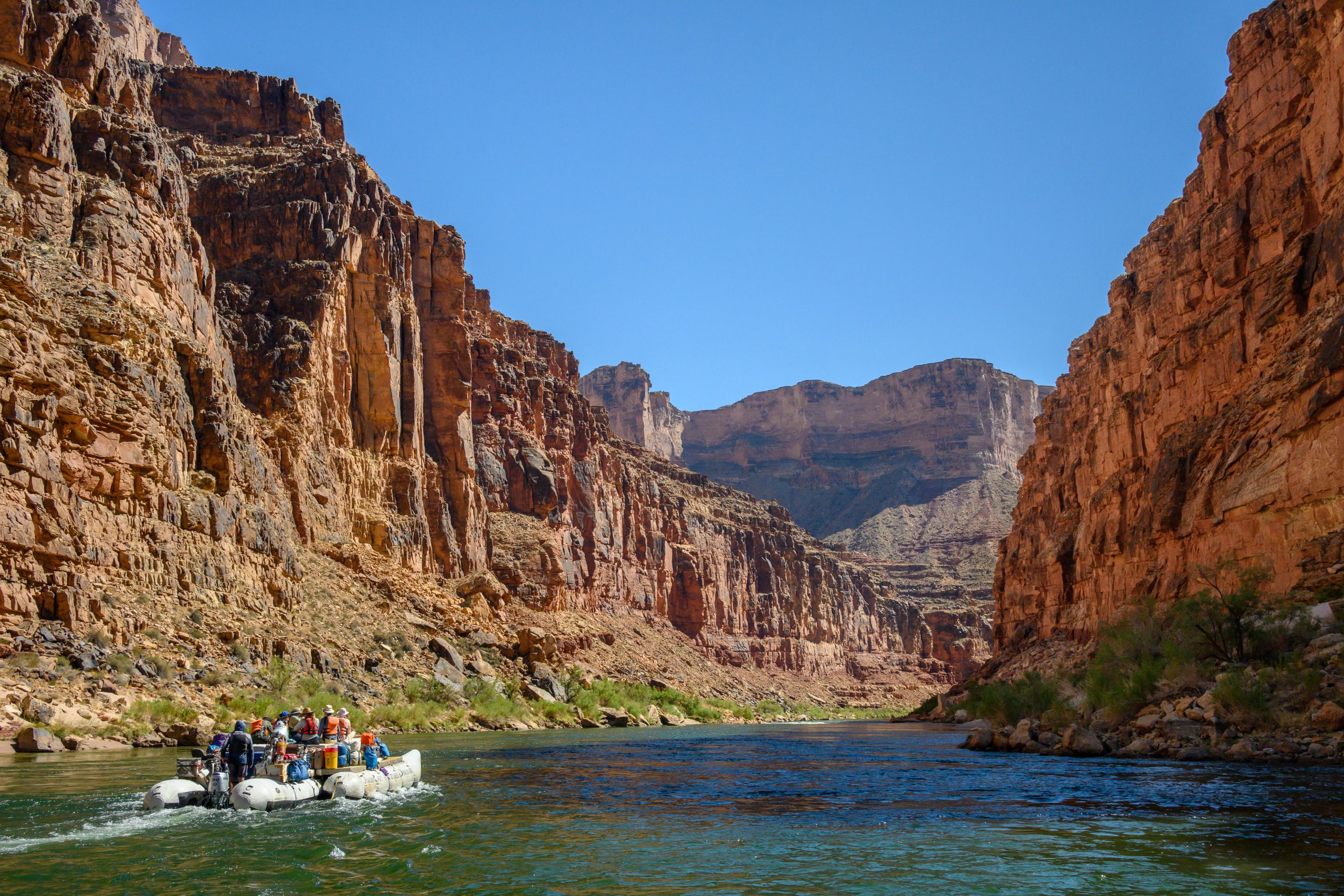
There are many ways to experience the canyon from below: oar-powered rowing boats or motorized rafts, short trips or long ones. Ed loves them all, but says he has come to favor the motor rafts, and the small groups that go with them.
Length matters too. “Eight days is kind of a hustle through the Grand Canyon in my eyes. Ten days makes it a little more relaxed.”
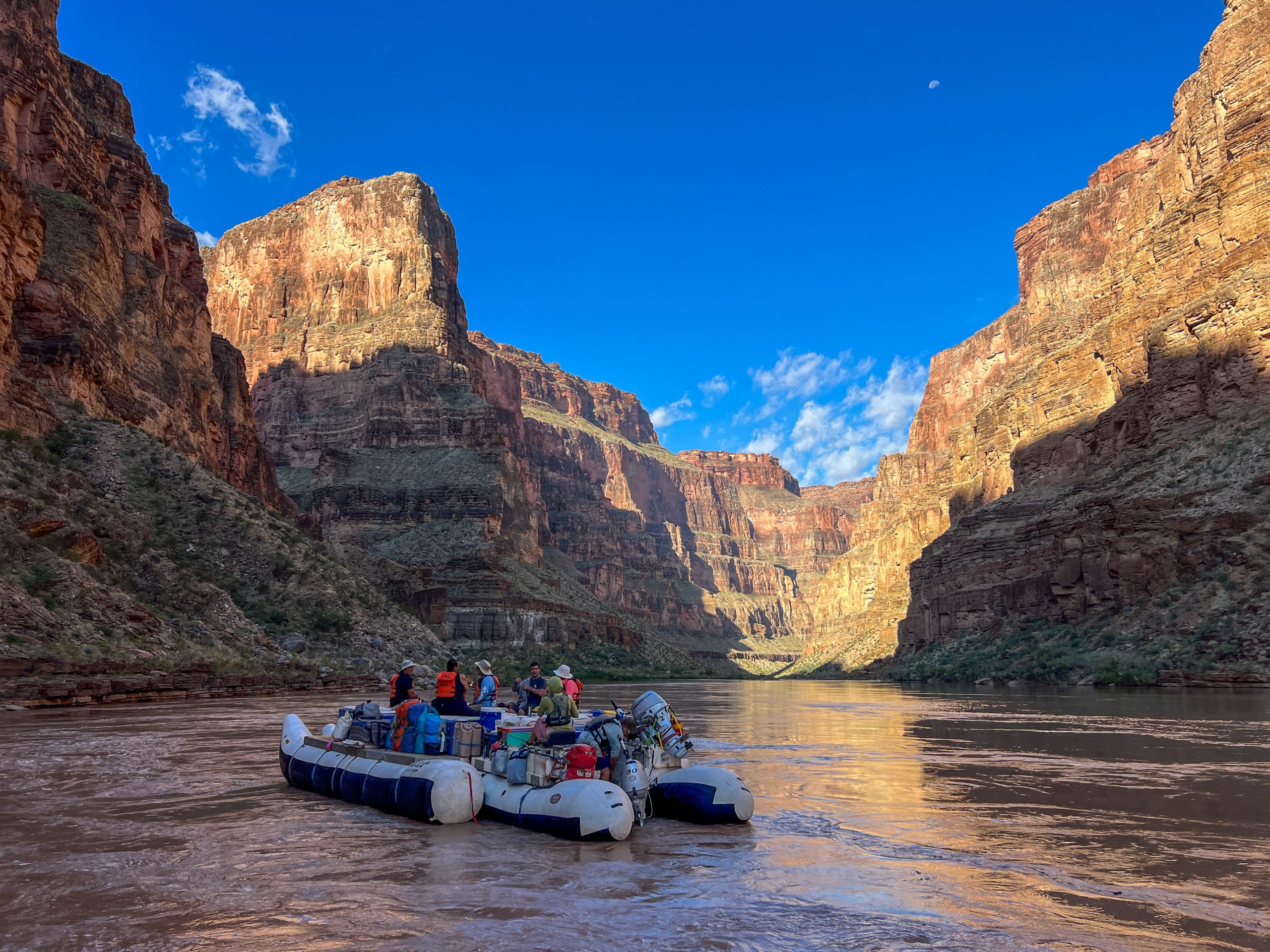
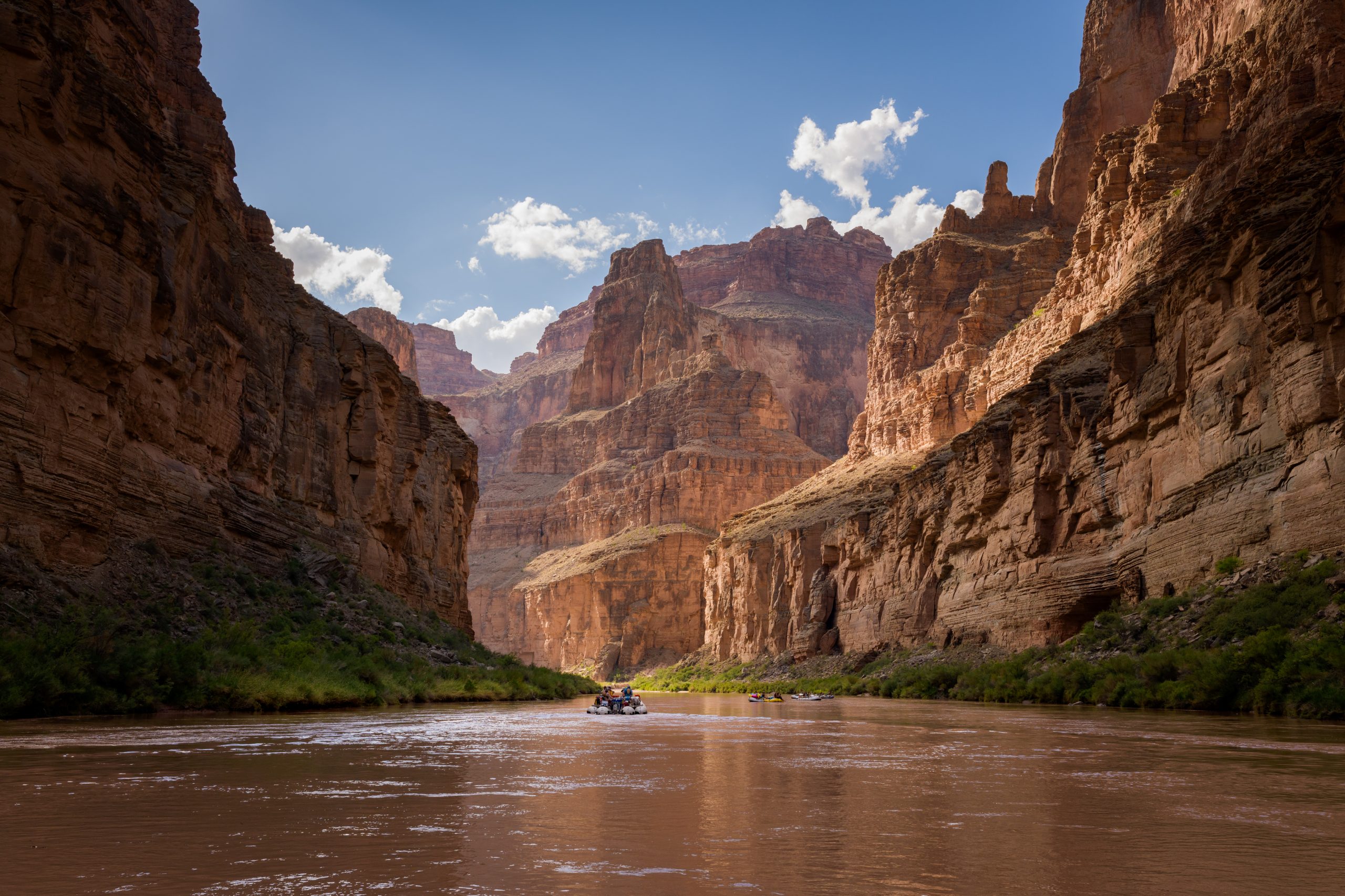
That’s the thinking behind the Muench Workshops itinerary: ten days relaxing on the river, two large motorized rafts, and 225 miles through Arizona from Lee’s Ferry all the way to Diamond Creek.
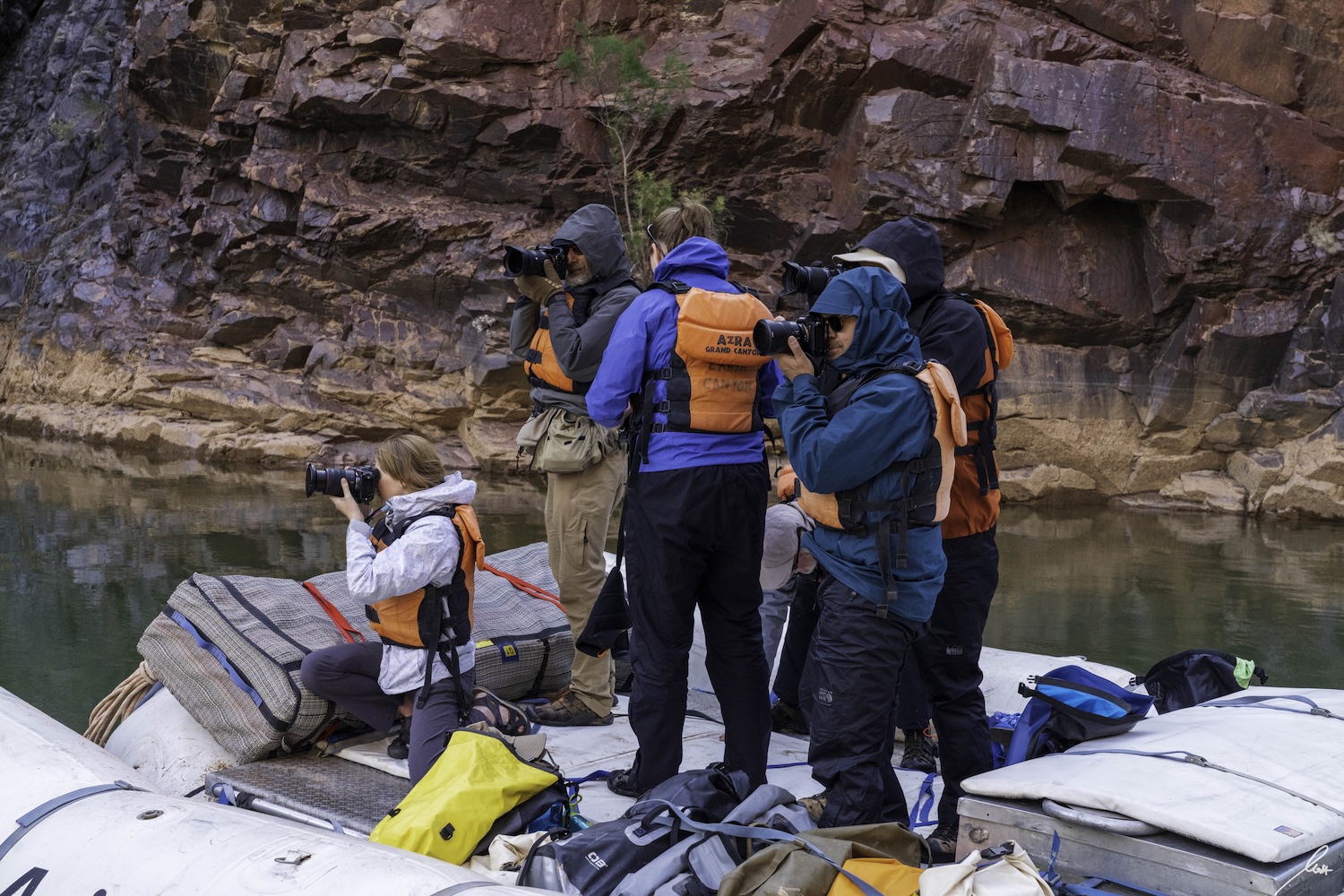
There’s room for everyone to spread out, and the quiet engines keep the miles from eating into the best part of the day, instead allowing more time for shooting and hiking up the river’s many side canyons.
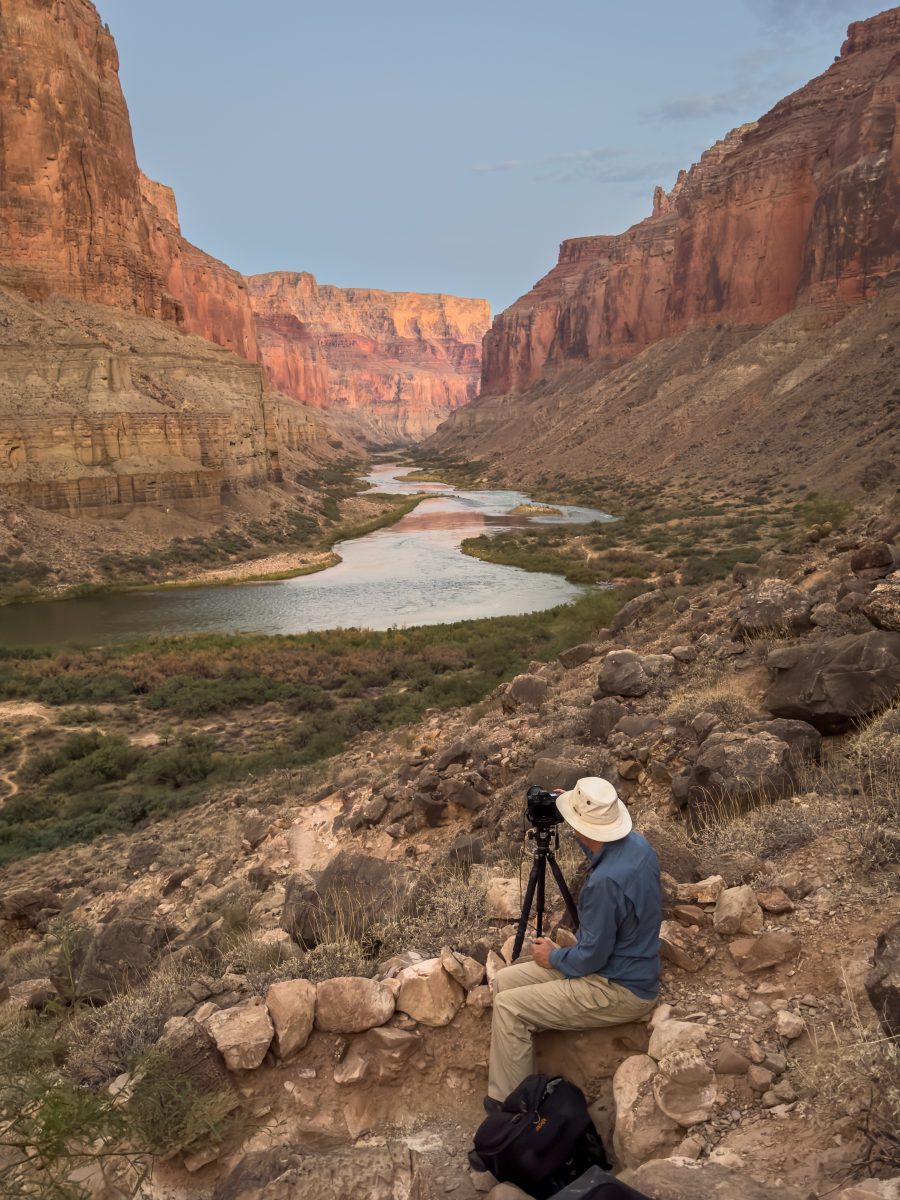
“We’re chasing light,” Ed says. “Photographers want early morning light, and they want late evening light. We might linger a little bit in camp in the morning because the light is good, and then get on the water a little bit later, or dinner might be cooked after dark because the evening shoot ran late. It’s all about the images.”
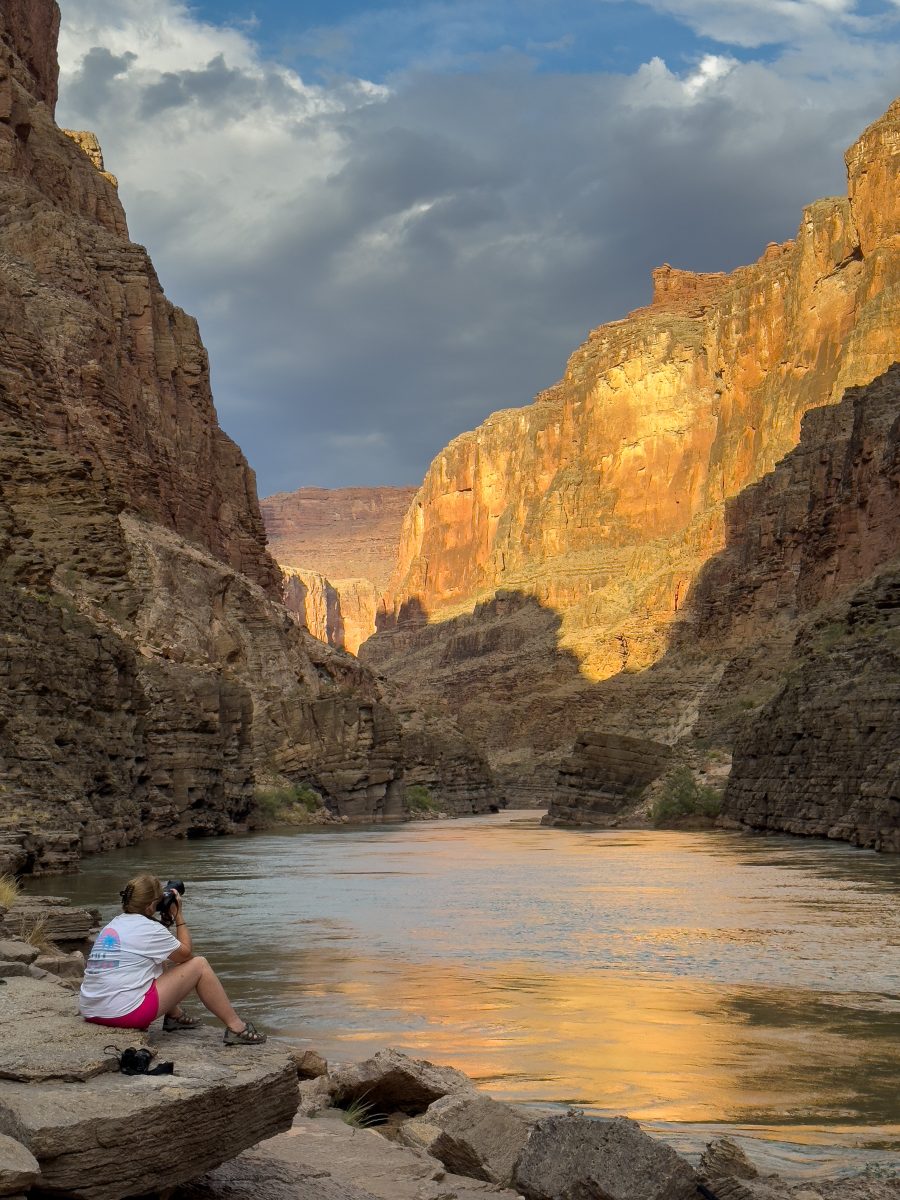
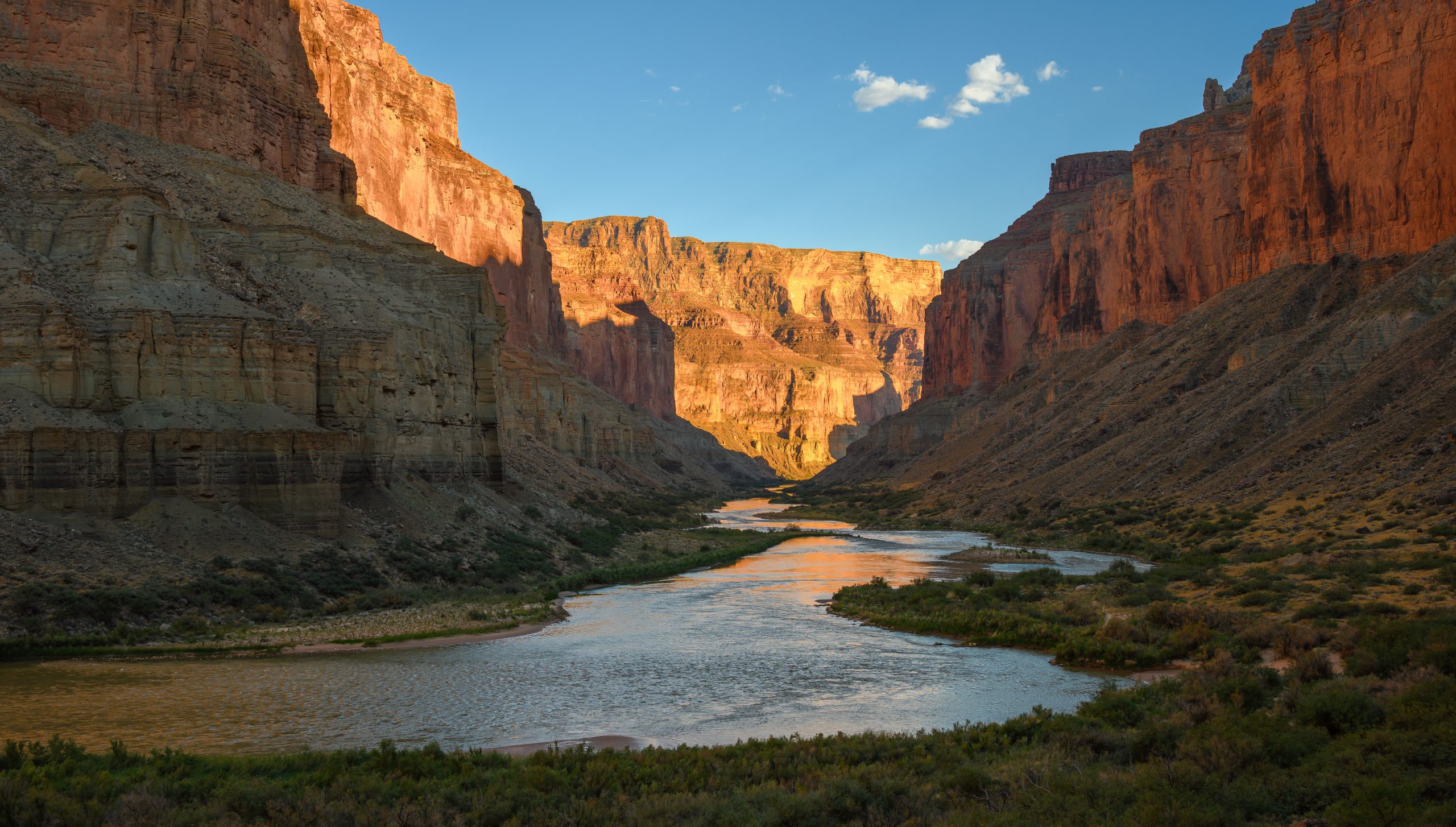
It’s not just about sunrise and sunset, either. Deep in the gorge, direct sunlight can create harsh contrasts between glowing rims and dark canyon bottoms. The real secret for photographers is what river guides call “bounced light”, when the intense desert sun hits a high redwall cliff, reflecting a soft, warm golden glow down into the shadowed river bends and side canyons below.
Captured at f/8, 1/500", ISO 200
A River With a Past
Long before anyone thought of rafting it, the canyon was a living landscape, central to the lives and beliefs of the people who made it their own. Eleven Indigenous tribes have roots here, from the Hopi, who consider the canyon their place of ancestral emergence, to the Havasupai, the “people of the blue-green waters.”
“They were in the Grand Canyon a long time before white men arrived,” Ed says. “We always want to be mindful and respectful that this was their home before we came along.”
Captured at f/4.5, 1/80", ISO 800
For most of modern western history, however, the Colorado through the Grand Canyon was a river few dared to run. As late as 1948, fewer than 100 people had traveled the canyon by river.
“It was just the great unknown,” Ed explains, “and the equipment back then was a lot more rigid.”
The game changed after World War II with the arrival of military surplus gear. Adventurers bought rubber floating bridges, cut them down into rafts, and used heavy-duty waterproof bags to navigate the river. Today there is a whole industry behind river boats.
The river itself has changed as well. Dams at the top and bottom of the canyon, Glen Canyon holding back Lake Powell and Hoover holding back Lake Mead, have transformed it. “You’ve turned this desert stream, which would normally be brown, into a high mountain stream,” Ed says. “It’s running cool and clear.”
Before the dams, spring snowmelt would bring big runoff and then low flows in the fall. Now the regulated flow has stretched the commercial season to roughly six months, keeping the river accessible for longer.
Captured at f/8, 1/60", ISO 64
On the Water
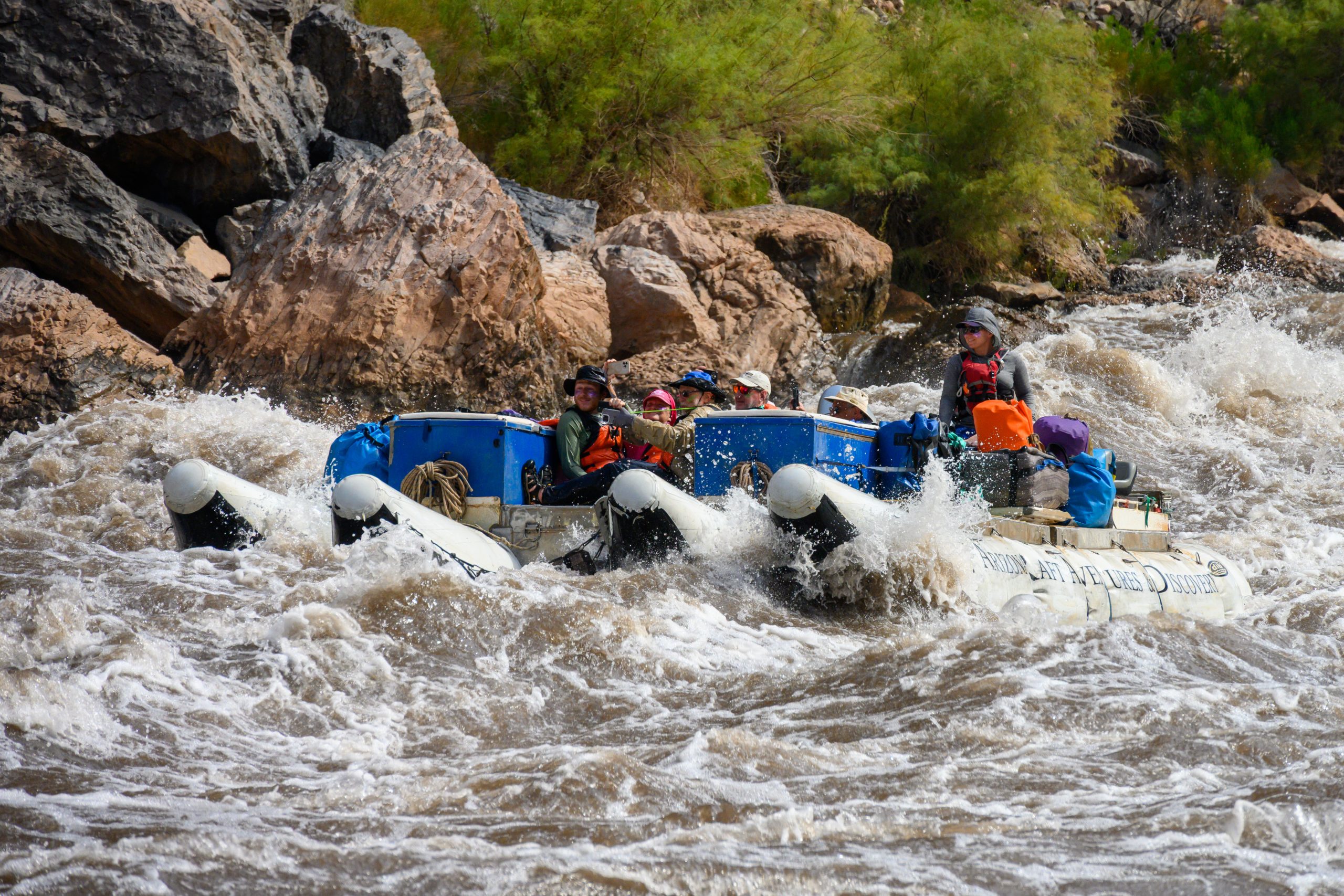
The stretch of the Colorado River that runs through the canyon is what’s known as a “pool and drop” river: long, calm stretches of water, interspersed with rapids that are caused by flash-flooding side canyons spilling debris into the main channel. “It’s not just all white water coming at you,” Ed says.
Lava Falls and Upset Rapid are two of the most well known areas of fast-moving water and the ones most people come across during a quick YouTube search of the river. But as Ed remarks, “You’re probably only in it for 10 or 15 seconds, and then you’re back in still water. There’s a lot of excitement involved, but there’s also a lot of time to relax and watch the world go by.”
“Your morning hours are kind of beautiful,” Ed says. “You’ll have shadows as the boat floats on down through the canyon.” The scenery keeps changing, too. The walls close in for much of the journey, then open out in the middle of the trip. The rock changes with them: layers laid down by ancient seas, and harder, older stone where the river runs fastest. “Each day is different,” he adds, “and it affords you all these different subjects.”
His favorite stretch is a 12-mile section through the Redwall and Muav limestone, where the iron-stained red cliffs soar hundreds of feet straight out of the water. “It’s just a lazy part of the river. There’s no rapids or anything to worry about. It’s just majestic and scenic.”
Lava Falls. Captured at f/8, 1/2500", ISO 900
Captured at f/9.5, 1/350", ISO 200
Side Quests
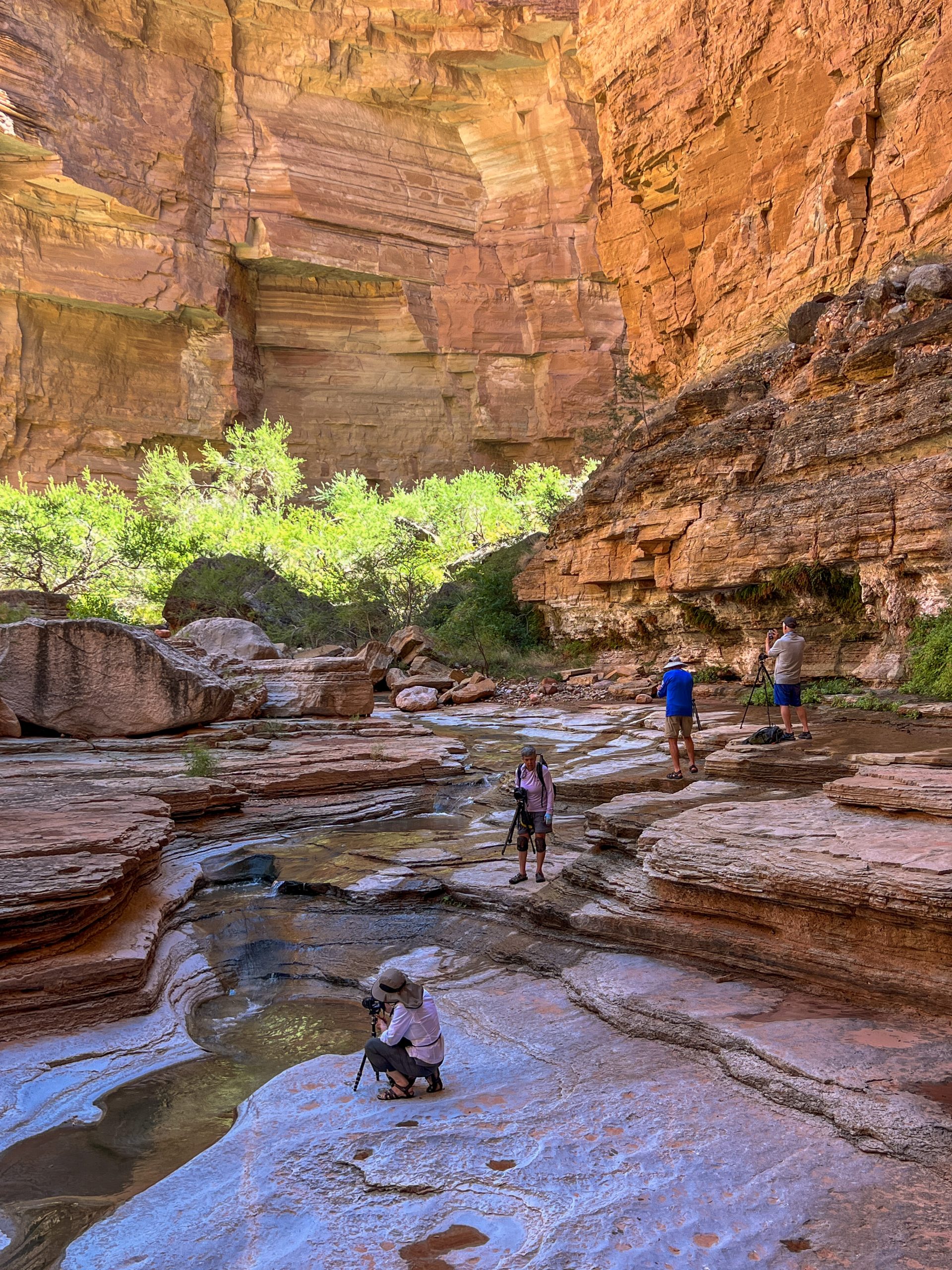
The river, Ed says, “is just a means of travel to get to your next side canyon.” Most days include a walk or hike in search of cascading waterfalls, turquoise pools, and reflection ponds, something that his photographer guests really enjoy. Many of these hidden spots can’t be reached on foot from above, so traveling by river is the only way to see them. The side canyons, he says, are “just spectacular.”
Among the best known are Elves Chasm, Deer Creek Falls, and Havasu Creek, whose brilliant aqua-blue water Ed compares to the Caribbean. In these narrow side canyons, calm pools act as natural mirrors, reflecting moss-draped limestone walls and soft overhead light. Further down the main river, the dark, polished walls of ancient rock at the canyon floor offer intricate textures for close-up shots, providing a striking contrast to the vast, sweeping scale of places like Redwall Cavern.
Elves Chasm Canyon. Captured at f/11, 2", ISO 45
North Canyon. Captured at f/11, 1/3", ISO 100
Sometimes just reaching these spots is part of the adventure. Where a gravel bar keeps the boat from getting close, photographers seal their gear in dry bags and wade in on foot. “Once we get through that pond,” Ed says, “then they can unpack their gear and start shooting.”
The canyons also keep changing. In monsoon season, a heavy storm can flash-flood a side canyon, so Ed is always on the alert. “If we see any real black dark clouds around us, we probably will not go up that side canyon.” Monsoons can often turn the river brown, which means the crew need to purify the river water to keep everyone supplied.
Floating through the gorge also puts you right in the middle of a surprisingly active habitat. “We see big horn sheep and mule deer. There are beaver down there. There’s coyote, gray fox, and a plethora of bird life. If you were a soaring bird, this would be the place I’d want to live.”
A group of desert bighorn sheep.
Camp Life
Camp is the heart of life on the river, and each night’s is somewhere new, tucked beneath the canyon walls.
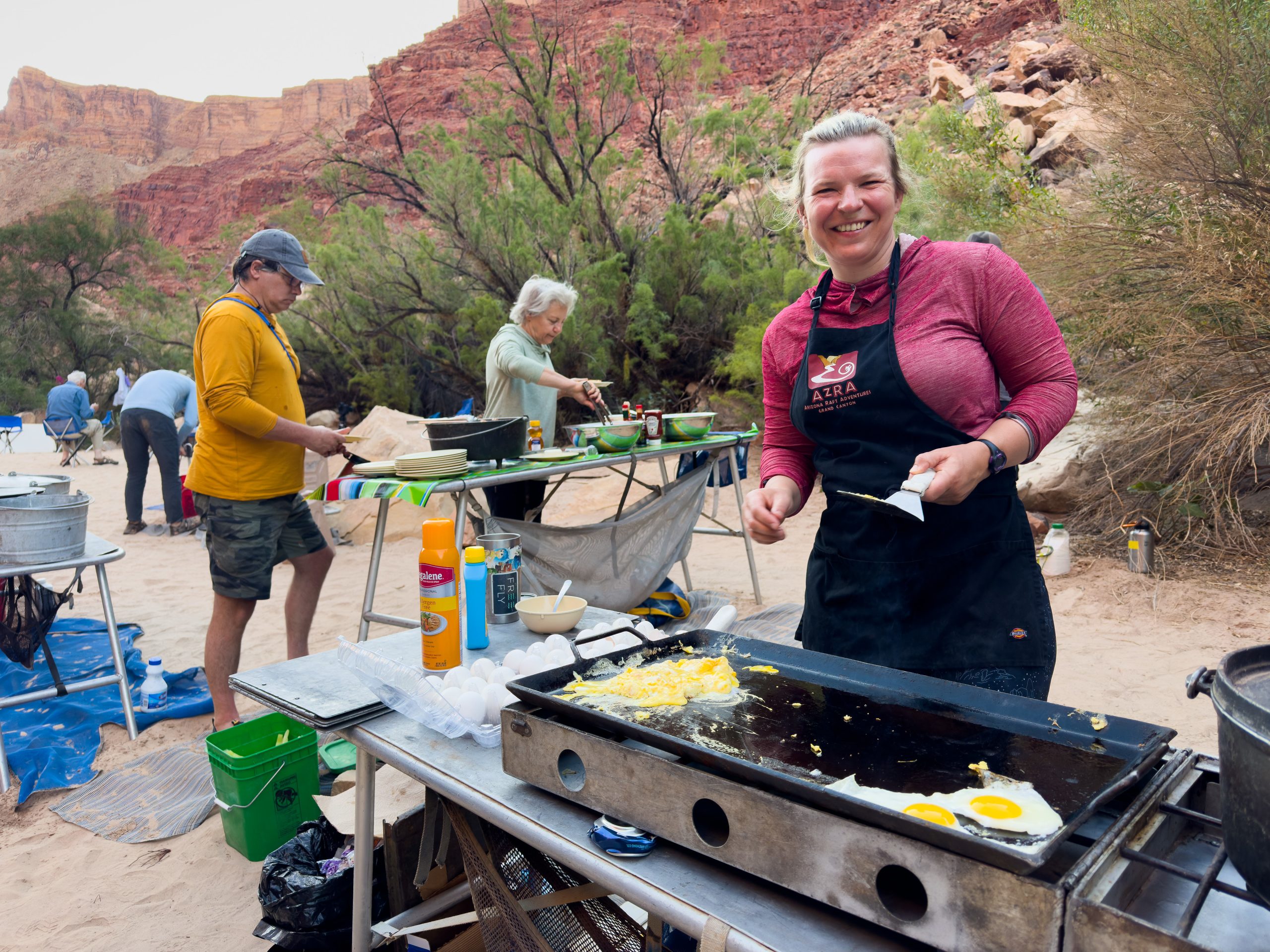
Before dawn, the guides are already making cowboy coffee: dark grounds are poured into a huge pot of boiling water and left to settle before early risers line up, mugs in hand, for their first fresh brew. Breakfast follows an hour or so after the sunrise shoot. Once everything is packed away, the boats push off again. Snacks are kept within easy reach on board, and soft drinks ride in a net slung off the side, chilled by the cold river water. Later on, the rafts pull over for a riverside lunch of sandwiches or tortillas and chopped fruit.
After another day on the river, the boats nose into the bank and the whole kitchen is set up again somewhere new for dinner. The kitchen gear, tables and stoves all travel in dry compartments in the boat, and guests often help unload by passing equipment hand to hand down the beach.
At camp, the work is left to the crew. The guides take care of the cooking and cleaning, although as Ed says with a smile, anyone who fancies a turn in the kitchen is welcome.
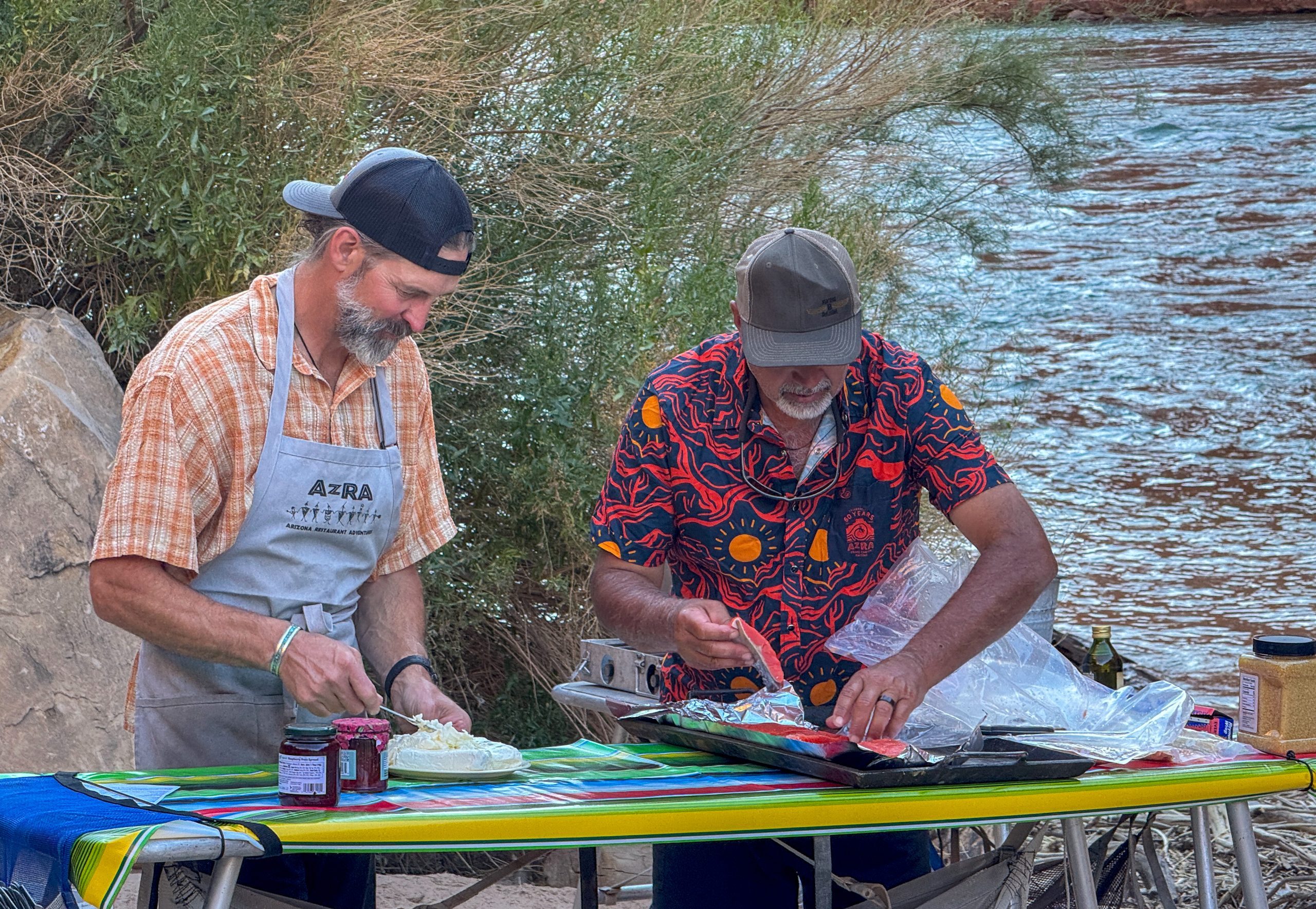
“If somebody wants to come in and help me slice and dice, I’ll put them to use,” he says. “Our kitchen’s no different than if you’re having a house party. Usually the kitchen is where everybody gathers.” For him, it’s a chance to get to know people, and for them to get to know him.
Fern Glen Canyon Camp.
Guides Dennis and Bill preparing salmon for dinner.
Astrid fixing breakfast in camp.
Lunch refreshments.
Come evening, tents and thick sleeping pads are provided, so you’re not “just sleeping on the hard ground,” and portable showers are available too.
And there’s no cell service. “Well, they don’t have an option, so that’s what’s great,” Ed laughs. “It really gives you the opportunity to disconnect.” The guides carry satellite phones for emergencies, but for everyone else, the absence of digital noise is what makes the experience, giving people the time and space to truly get to know one another.
Under the Stars
When asked the best thing about a night in camp, Ed’s answer has nothing to do with tents.
“Being in Arizona, I usually downplay tents, because our starry nights are something you should not miss. You’re usually going to have the Milky Way out there as well. And with every campsite, you’re in a canyon, so you’re framed differently every night. Sleeping under the stars is where it should be. A tent should only be used if you’re expecting to get rained on.”
Granite and Schist rocks at mile 114. Captured at f/2.4, 8", ISO 800
A Canyon Worth Seeing Now
As we wound up our conversation, I asked Ed what had changed most on the river during his career, and his answer looks ahead as much as back.
“The biggest thing for us out here is that we’re experiencing a drought, and it’s been around for quite some time,” he says. “The West here in the United States is living off artificial water. So I think that’s going to be our biggest issue in the next decade: where is the water going to come from, as these two massive reservoirs are dwindling down and slowly disappearing.”
“It really doesn’t affect how we run trips yet,” he adds, “but it might be something that culminates in the next five years, where it might start impacting us.”
When the river season wraps up in the fall and the last trip comes off the water, Ed’s off-season begins, and he heads for the mountains. A ski enthusiast, he spends the winters operating snow cats at a ski resort, grooming the slopes at night, a rhythm he has kept up for more than 40 years.
Come spring, when the snow melts and it’s time to trade the snowcat for the raft frame once again, Ed never hesitates to head back down to the water. For him, there is simply no place on Earth that compares.
“Even the rare bad day in the canyon,” he says, “is better than most good days out of the canyon.”
The Colorado River winds through massive canyon walls in one of the most scenic wonders of our world, the Grand Canyon. Join Muench Workshops for this...
Register for any workshop before midnight, July 7, 2025 and we’ll apply the $500 discount to your final balance payment.
Offer valid on new registrations only.
Cyber Monday Sale!
$750 Off Any Workshop
SALE ENDS IN:
Days
Hours
Minutes
Seconds
Save $750 off workshop. New registrations only. Discount is applied to your final balance payment. This offer expires at midnight on December 1, 2025, Eastern Daylight Time.