Author: Drishti Arya
When my friends and family asked where I was going before this workshop, I would say, “Somewhere near Las Vegas, called Death Valley!” Little did I know, one week later, that the place somewhere near Las Vegas called Death Valley would forever hold a special space in my heart. It would be a place I’d want to visit again and again! I finally understand why some call Death Valley a photographer’s paradise!
Day 1 – Windy day in the desert
We met in the hotel lobby in Las Vegas at 11 am. From the get-go, the conversations were engaging, and having an early insight into Matt and Wayne’s teaching style brought even more excitement to the journey.
Lee Valley
It was a windy morning in Vegas, and the wind followed us to our campground in Lee Valley, where Joshua trees and snow-capped mountains surrounded us.
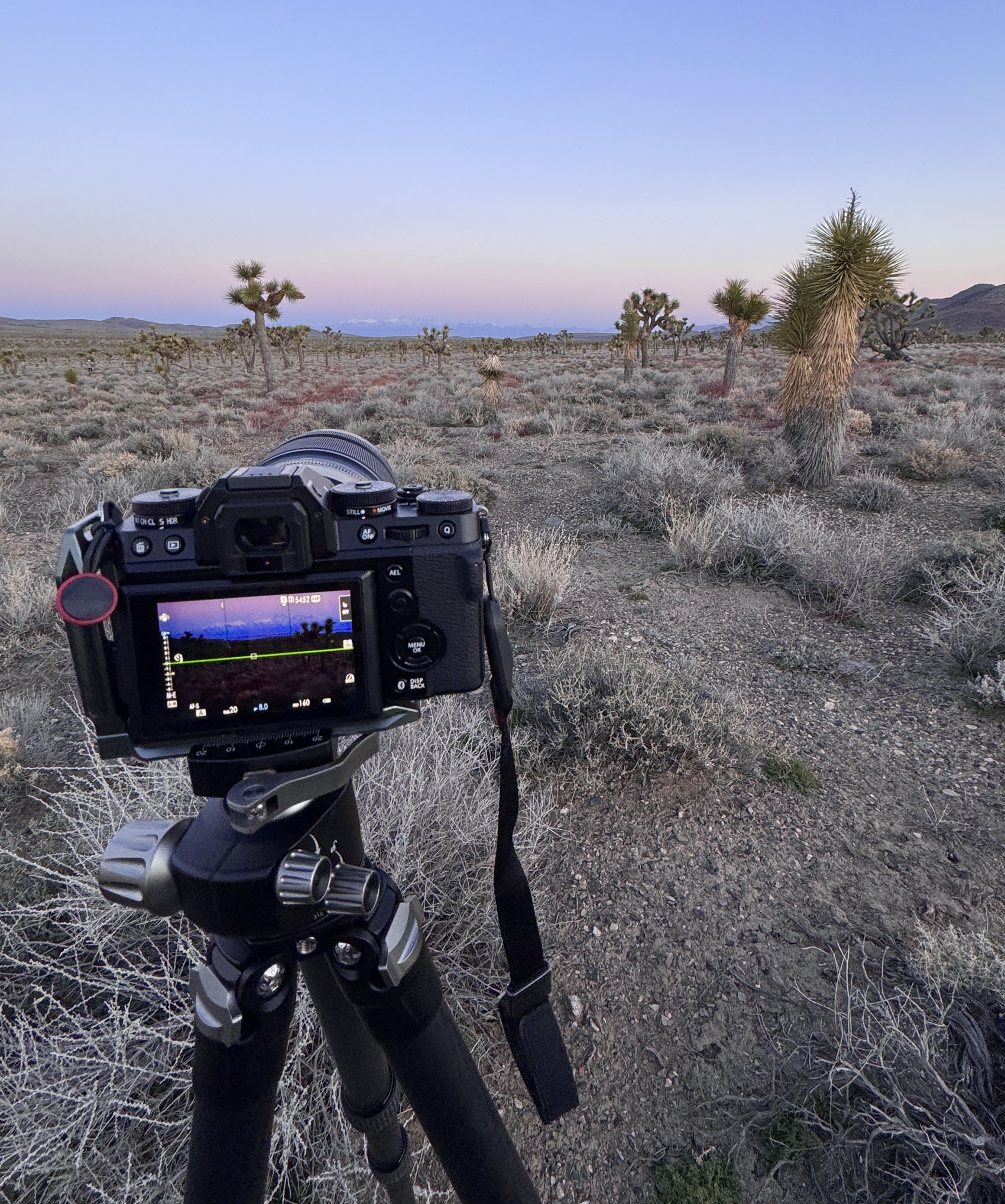
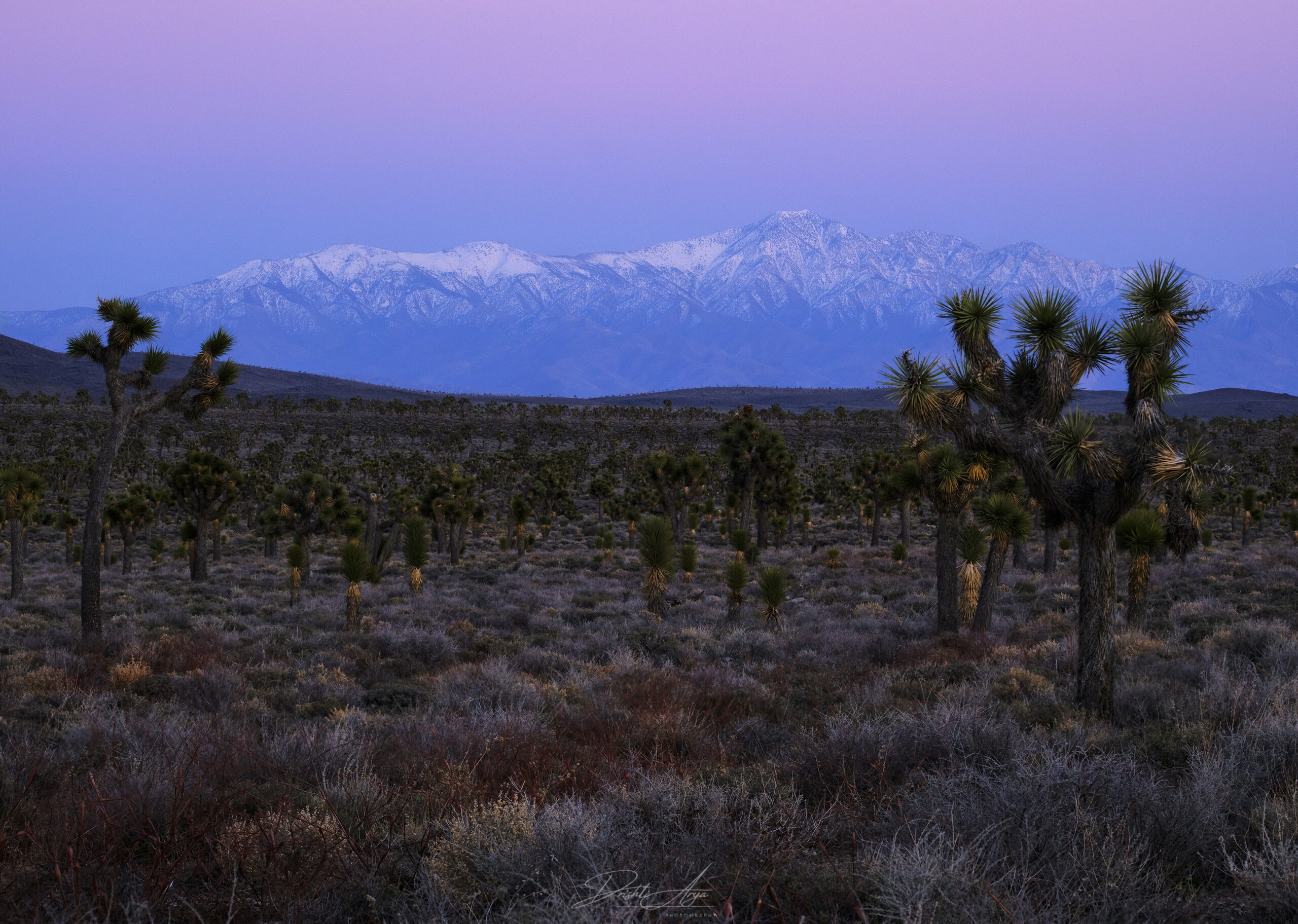
Our first shooting location, which Wayne described as a compositional challenge, was a short drive from camp. Because it was the first shoot, I was a little slow with switching lenses, and oh! I forgot the tripod foot for my long lens at camp. The light changed quickly, and finding a good composition felt like it was taking FOREVER!! I remember thinking, “Wayne was right, this is TOUGH!” Funny enough, slowing down and being intentional became key. Walking deeper into the forest, I found a promising location where the Joshua trees book-ended my composition. I left my gear and walked a few steps left and right while trying to compose with my phone. Finally, I found something that could work, but I wasn’t 100% convinced. I wanted to create separation between the Joshua trees and the mountains, but moving the slightest bit would bring distractions into the frame. With the light changing so quickly, I could not waste more time and just clicked the photo.
As I was capturing the photos for my focus-stack Wayne came over and said he was impressed with the composition. It’s funny how you can truly be your own worst critic.
Learnings from Day 1
- Near-far experience: Reducing the amount of space the middle ground takes up in a photo
- Separation between elements: Creating space between different elements of a photo so they don’t overlap
- Belt of Venus: Caused by the Earth’s Shadow, pinkish glow visible shortly before sunrise or sunset.
- Be patient with yourself: It’s ok not to have things perfect from the get-go. Sometimes the imperfect moments create the best photos.
- Focus Stack: Focusing at multiple different points in a composition while in the field.
The starry night
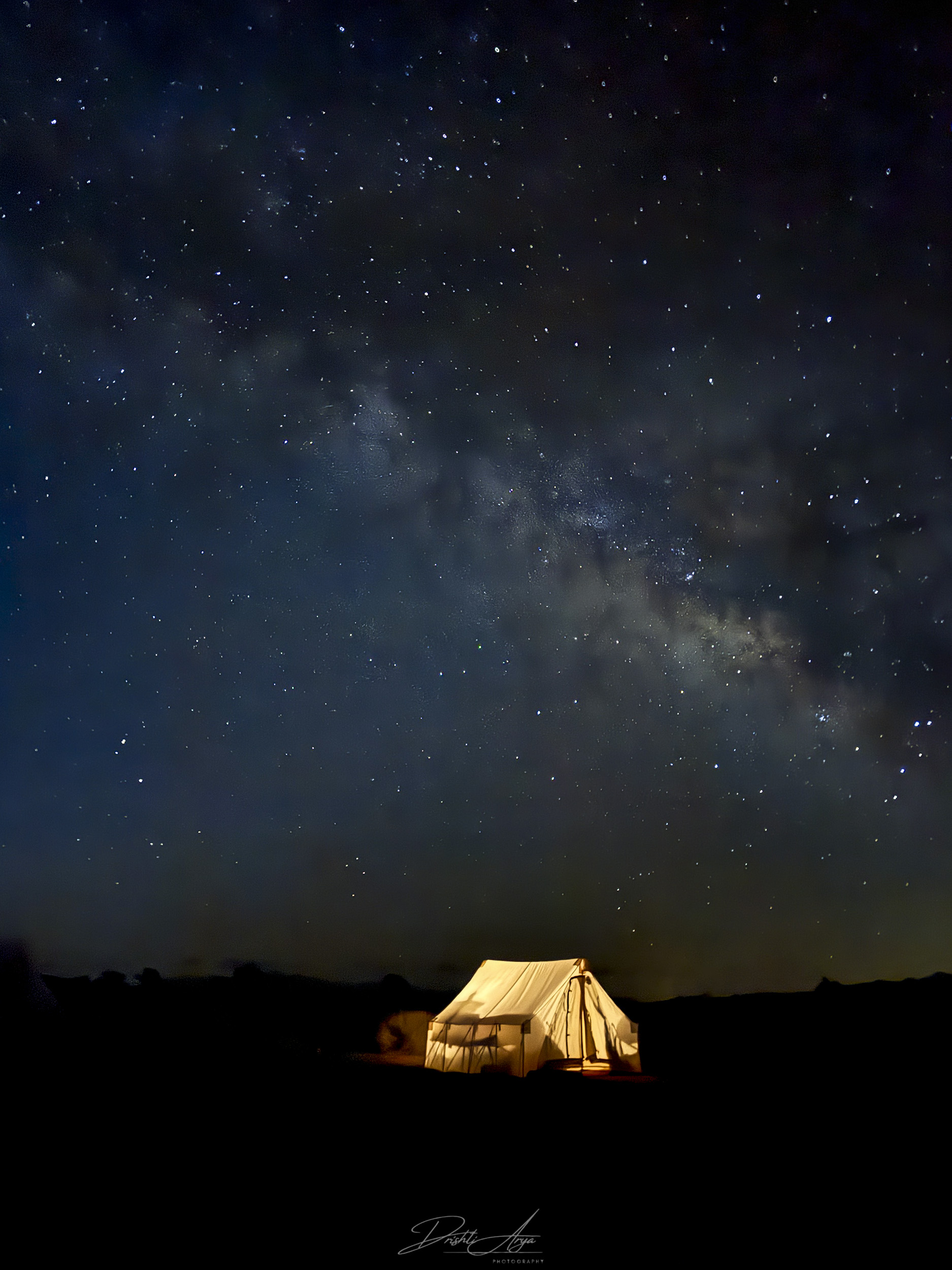
We tentatively planned to shoot the Milky Way at 3 am as the skies were clear, and we were hopeful that the winds would die down. Long story short, the winds did not die down, they were loud and made their presence known throughout the night. I remember laying in my sleeping bag with my camping pillow, half inflated, terrified by the sound of the wind. Wayne woke up at 3am and gave us all a heads up to not wake up to photograph the Milky Way given the weather conditions. By this point I had given up on trying to get any sleep and decided to venture out the tent and just look at the sky. Words can’t describe how grateful and happy I was at that moment. I was in awe of the number of stars I was seeing in the night sky. Despite the weather, as I turned to the left, none of it mattered because I FINALLY saw the beautiful Milky Way right above our camp. I had to capture this moment and managed to shoot this beautiful image from my phone.
Day 2 – Dappled light & a sandstorm
We met in the dining tent at 5:45 a.m., and our planned sunrise shoot was a short walk from camp. We were greeted by panoramic views of the mountains with Joshua trees in the foreground, which made for some amazing photo opportunities.

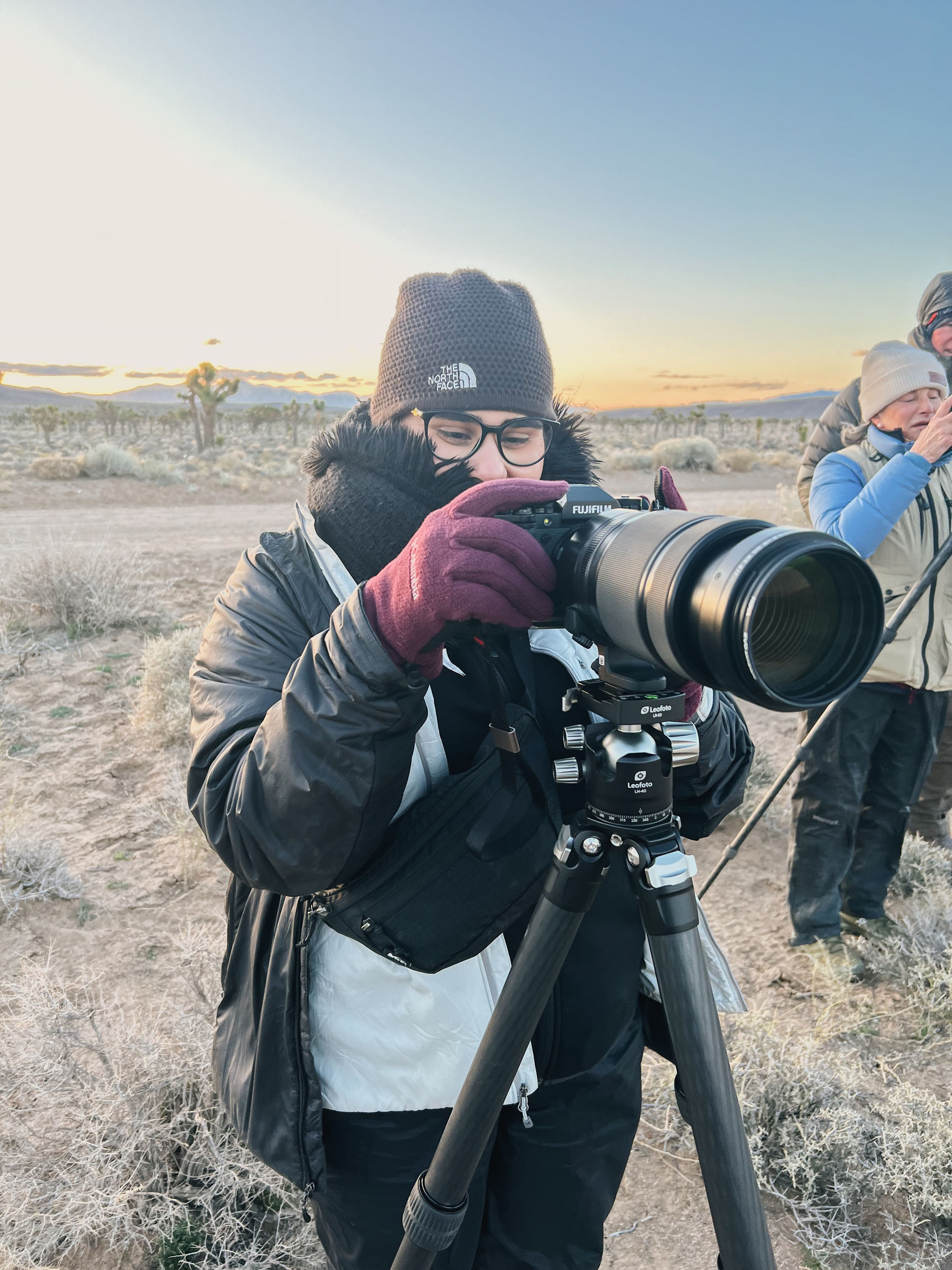
Staying warm was not easy. Patiently waiting for the sun to rise above the mountains, I set my tripod down where I knew I wanted to take the sunrise photo and waited for the perfect light. We were facing the wind head-on, and our hands and feet quickly got cold. A benefit of the strong winds was that the clouds moved fast and had a beautiful pink glow. If you waited a few minutes, you could get the clouds exactly where you needed them in your composition.
Nearly three hours later, perfect dappled light lit up the scene. There were moments where the light would just be on specific parts of the scene, in this case, the mountain range and Joshua trees, which helped create perfect separation amongst the different layers of the composition.

After a quick breakfast, we packed up camp and drove to Stovepipe Wells, where we would spend the next two nights. As we waited for our rooms, we had our first critique session. It was amazing to see how multiple people captured the same scene so differently. The session brought moments for reflection and learning for each photographer on the trip.
The sandstorm
It was a short drive to our sunset location, Mesquite Dunes. We walked right into the sandstorm, and oh boy, the photographic opportunities were amazing. As we trekked through the swirling sand, I discovered my camera’s resilience in extreme weather, capturing moments I’d otherwise miss. We all stood on a mini dune capturing the sandstorm with the mountains in the background.

As we explored the location and went further into the dunes, we all lined up tripods to capture the warm golden light that burst through the clouds and lit up the scene. Auto-focusing with the camera in these conditions was nearly impossible. You were forced to be patient and capture as much as possible without seeking perfection.
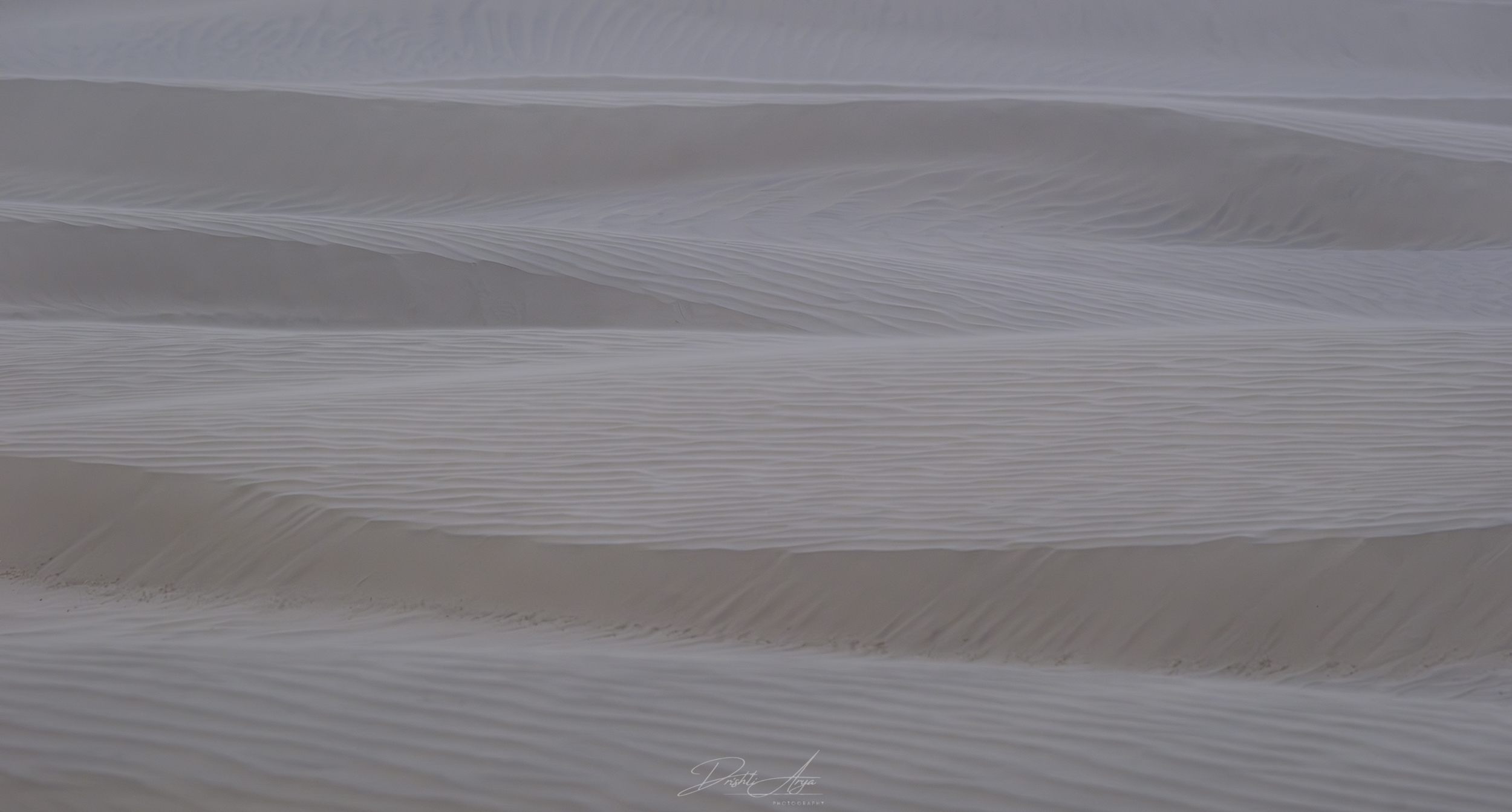
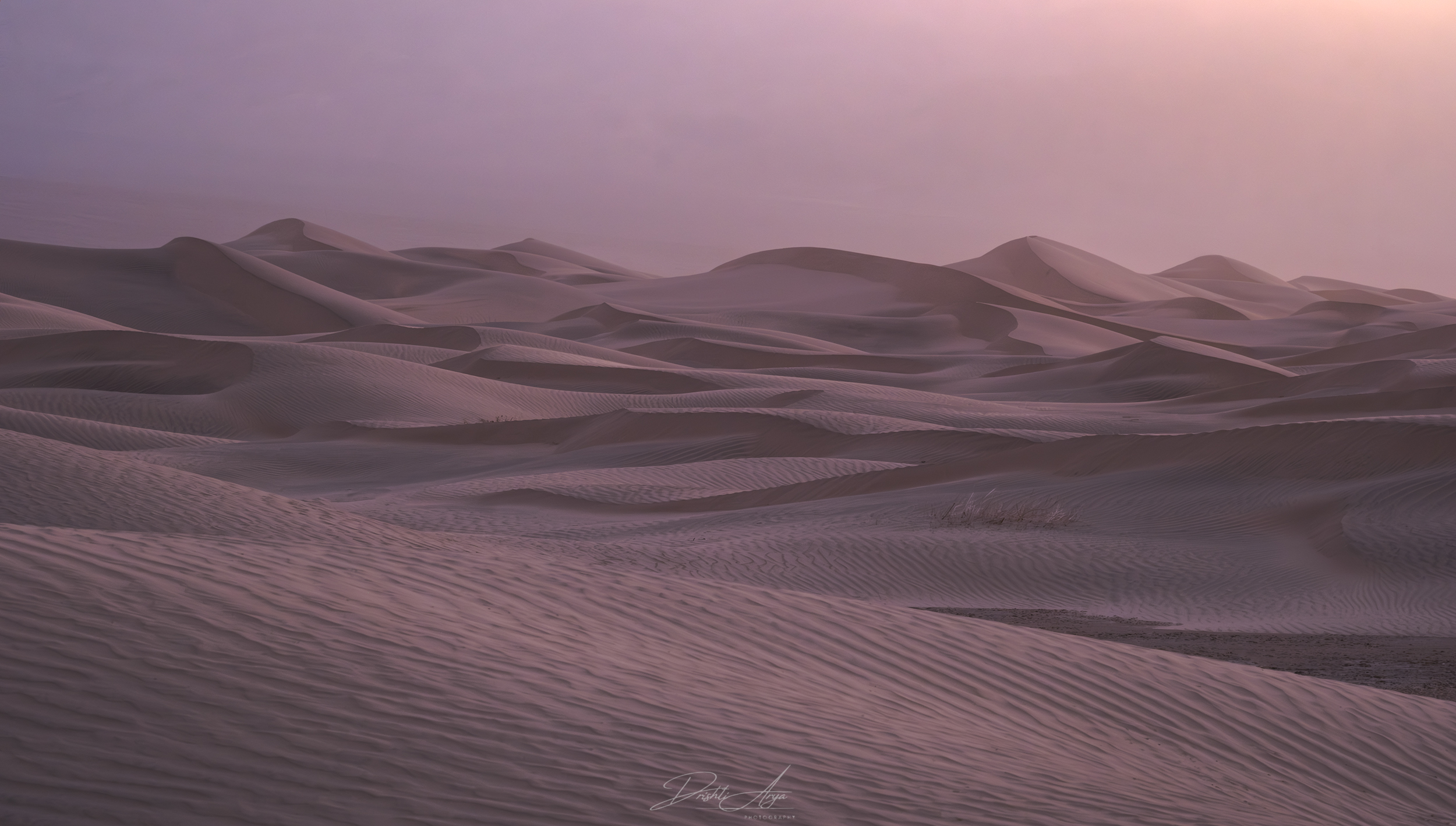
The winds began to calm down as the sun went below the horizon. The storm left behind interesting patterns in the dunes that I could continue to photograph for hours.
Learnings from day 2
- ISO Invariance
- Shooting in Manual Mode
- Look at the histogram—it’s an important step when understanding your exposure
- Shooting at base ISO doesn’t always make sense—because of ISO invariance shutter and aperture are more critical.
- No right way to shoot in manual mode – the conditions you shoot in and the visual outcome you want to achieve should dictate the settings
- Focus Stack Processing: During the critique session, I learned how to process the images I took the previous day as a focus stack using Lightroom and Photoshop.
Day 3 – Layers of Colored Stone
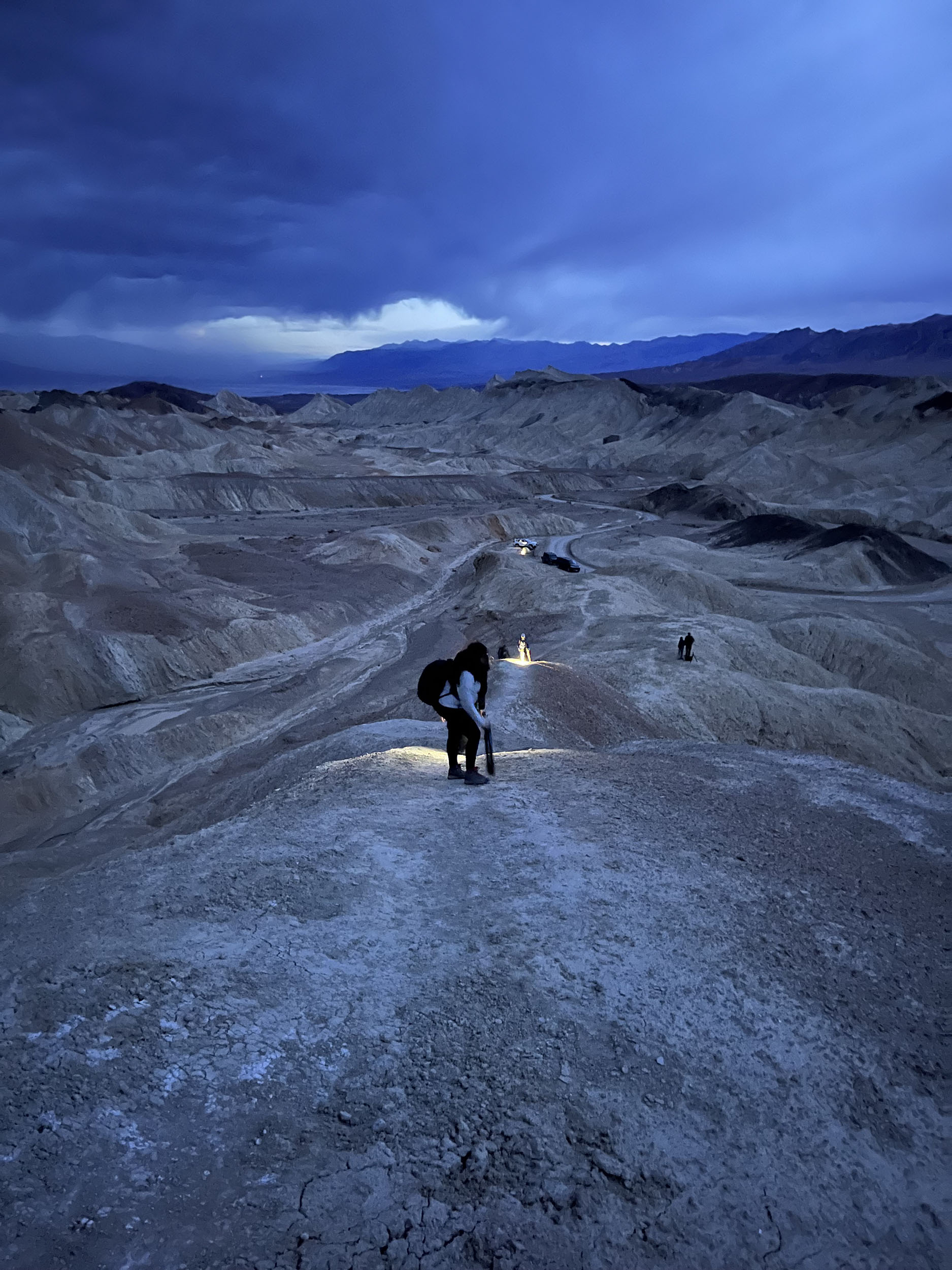
Wheels up at 5:40 am! We photographed 20 Mule Team Canyon for sunrise. We were greeted with perfect soft light as the clouds acted like a giant diffuser. The hike up the canyon was steep, but the views were worth it! We could see the rain clouds all around us and hoped that they would spare us for just a few hours longer. Surely they did.
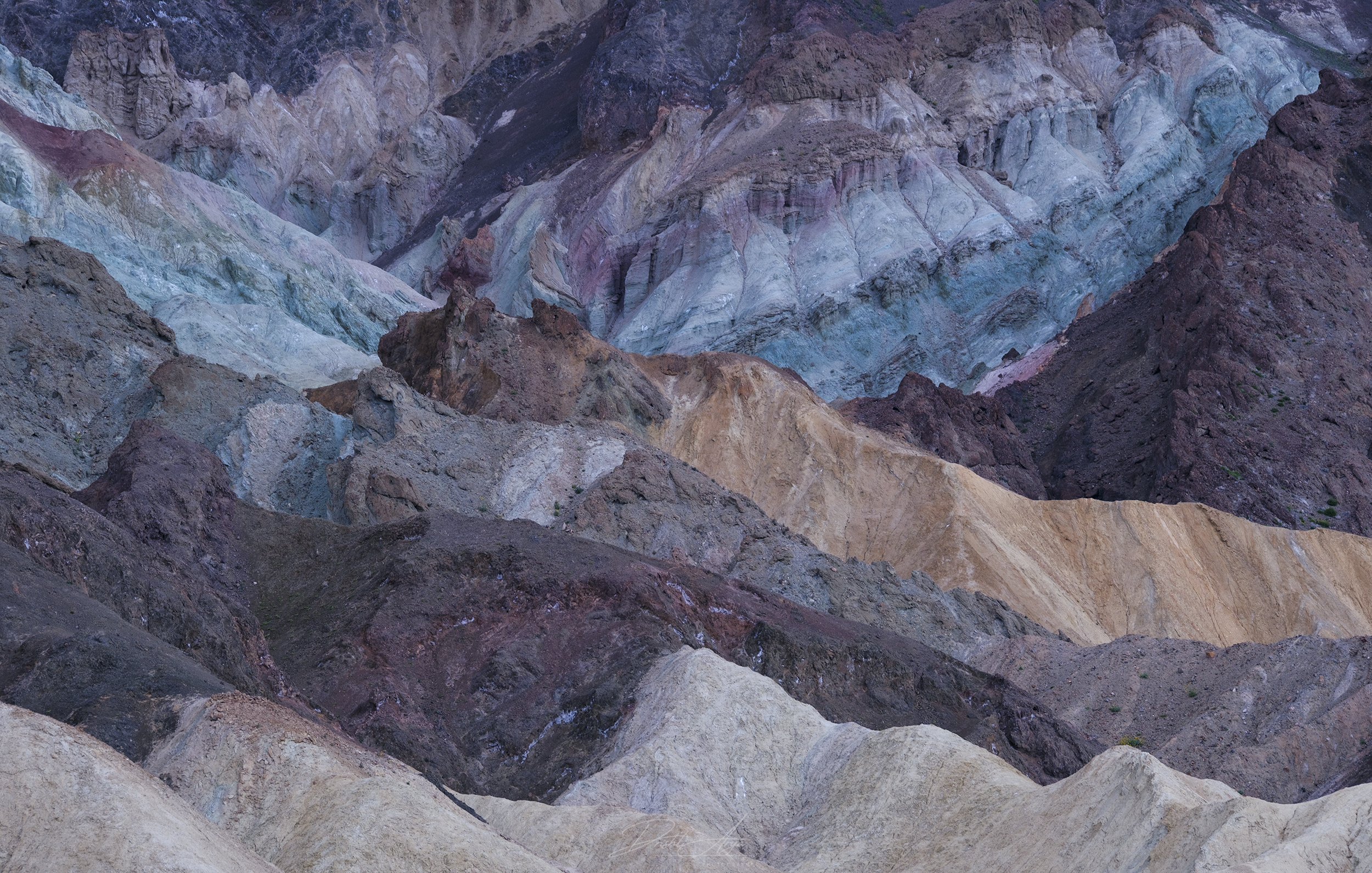
The views were panoramic, but I was immediately drawn to the layers of colors and spent most of my time capturing intimate landscape scenes like those below.

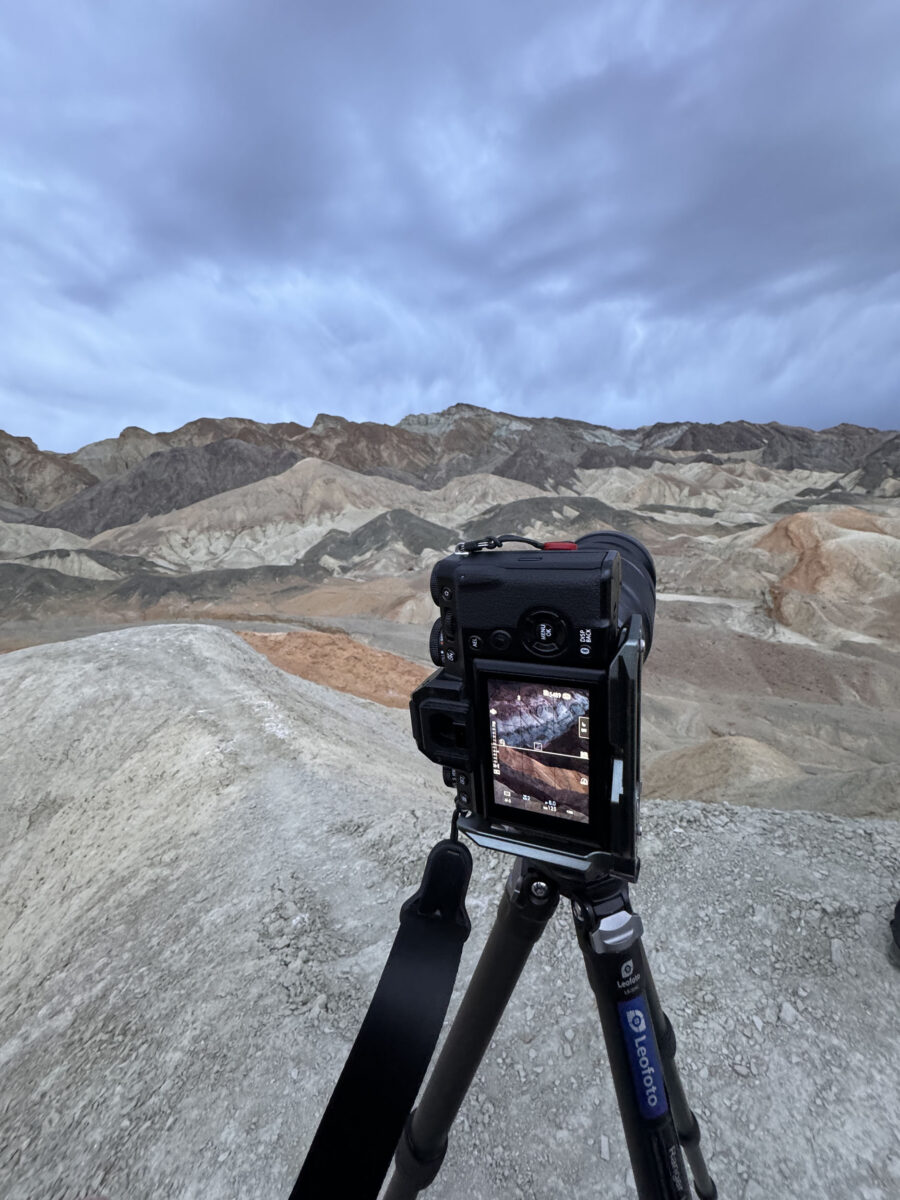
Soon after we left the location, it started to rain heavily. We made our way back to our hotel and had a warm breakfast. Waiting for the weather to pass, our afternoon was spent in another critique session. You could tell by the images we were seeing that everyone was getting more comfortable with their cameras and learning so much.
After getting some much-needed rest, we made our way to Artists Palette. This location has been photographed by many, and photographing with so many people around made it tougher to focus on the composition. Even though this was one of the only locations I had heard of before the trip, I found myself uninspired. A combination of physical and mental fatigue started to kick in.
We changed into our Muck boots by the car to prepare for our sunset location, Cotton Ball Basin. Mental and physical fatigue continued, and I found it hard to find good compositions even though the location and conditions were perfect. As I walked through the location with Jess Griffin, she said something that I needed to hear: “You know, sometimes it’s ok not to take photos and just enjoy the scene.” It’s hard to accept when your body is tired and easy to get frustrated when you feel like you aren’t taking good images. I’m so glad I took her advice and didn’t pressure myself to take photos at sunset. It helped me stay in a good mindset for the remaining days of the trip and avoid creative burnout.
Learnings from Day 3
- Checking the corners: Check the corners of your frame when you’re composing to make sure you’re not including any distractions that are hiding below all the information overlays on your LCD screen.
- Visual weight in composition: Look to see which elements of the composition are taking up more space in the photo and work to balance them out in the field.
- It’s ok to rest: Sometimes it’s okay to rest and take a break from photographing to avoid creative burnout.
Day 4 – Time Slows Down
It was hard to believe I had only known this amazing group of people for four days. Time starts to slow down on these workshops. A week feels like a month—there’s just something amazing about focusing only on taking photos with others who love taking photos as much as you do! The all-inclusive experience with Muench Workshops makes this even easier, as all you need to consider is capturing beautiful photos!!
On day four, we intended to photograph Dante’s View. Unfortunately, the visibility at the viewpoint was 0% because of the weather. We quickly made a decision to switch the location to Zabriskie Point. The pros had such good knowledge about the park and knew when to pivot to give us the best photographic opportunities.
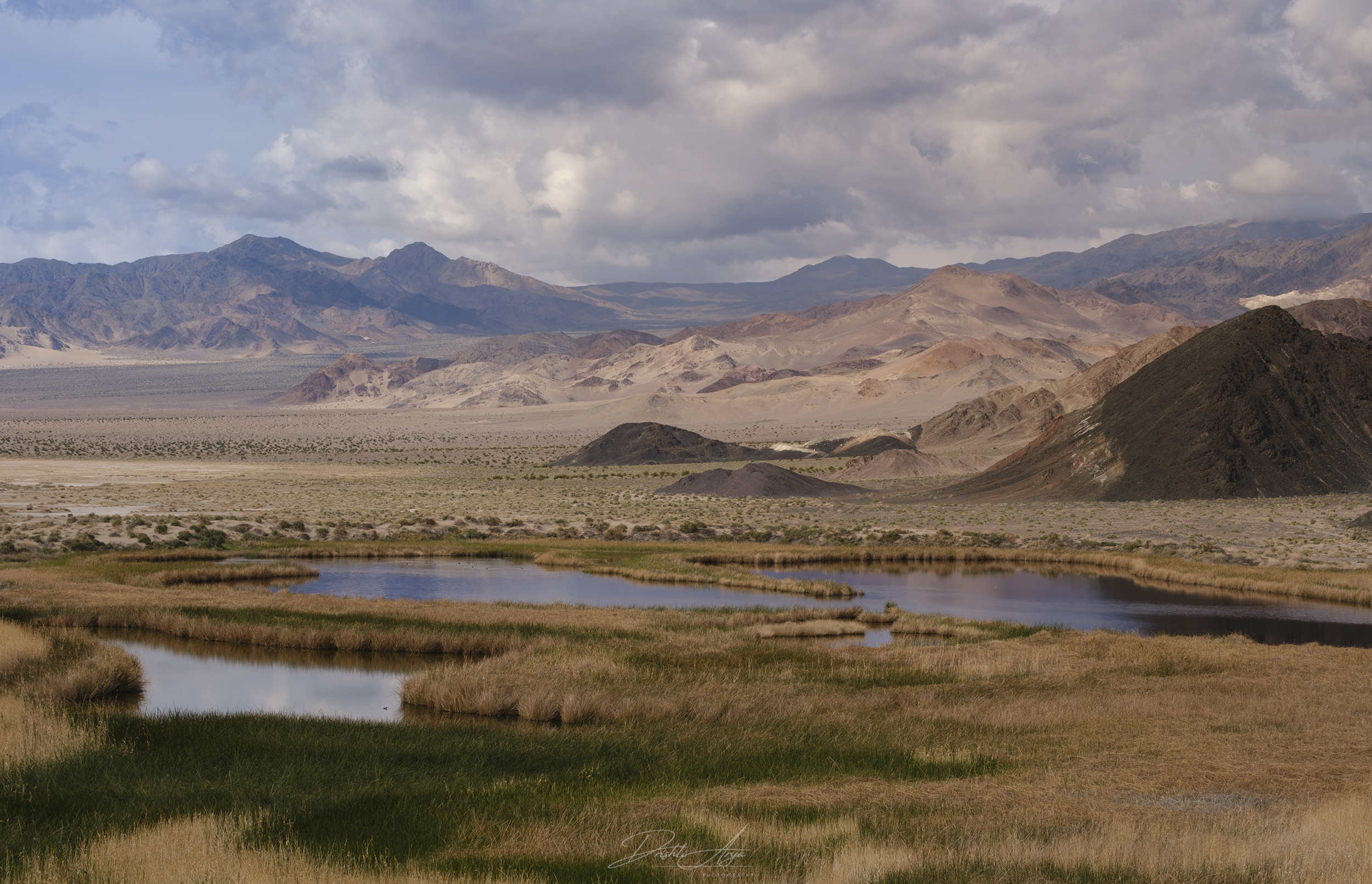
After a quick breakfast, we checked out of our rooms and drove to our next camp! Once we arrived, we quickly settled in and went out for a pre-sunset shoot at Saratoga Springs. You could see the reflection of the mountains in the large pools, and the low clouds plus perfect light made this scene even more compelling.
For sunset, we hiked ~1.5 miles to Ibex Dunes. Photographing dunes in calmer conditions was such a different experience.


Learnings from Day 4
- Balance in composition: This can be achieved in multiple ways with light, colors, or the amount of visual weight different elements of the composition have.
- Intentional Camera Movement (ICM) Photography
Day 5 – The Perfect Morning
The wake-up call was at 3:20 am because we had clear skies, no wind, and a perfect location to learn how to photograph the Milky Way with our cameras.
This is a moment I have been looking forward to for three years. The cherry on top was learning from Wayne Suggs. I have loved and admired Wayne’s night sky photos for a long time. We hiked to Ibex Dunes, where Wayne had already scouted/planned the location for the photo. We took multiple photos exposing the sky so we had enough options to choose from. We then took as many photos as we could before astronomical twilight began, exposing for the foreground.
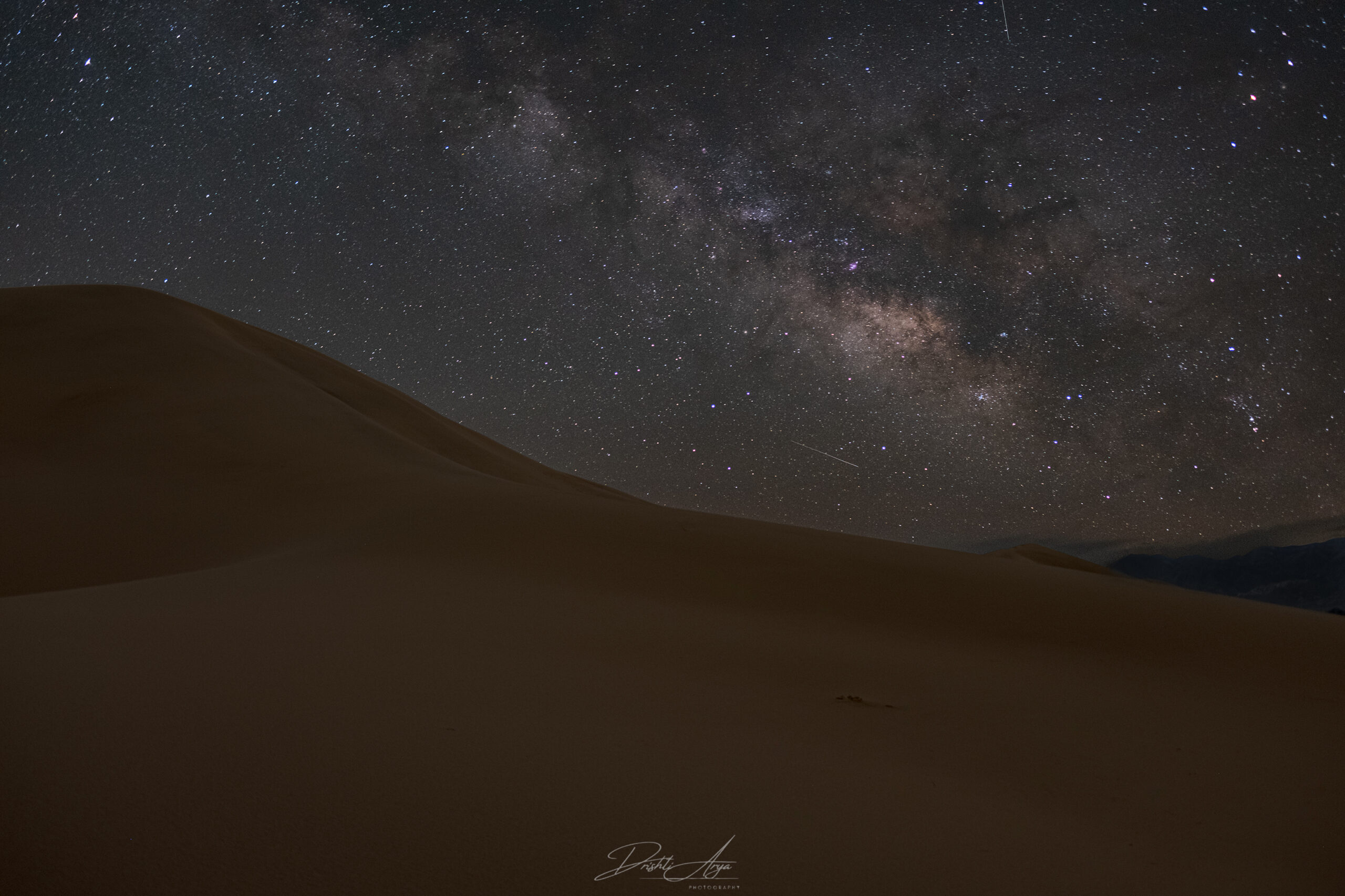
We had about an hour before sunrise, and Matt promised he had a perfect location in mind. We hiked through the dunes in the dark for about a mile.

The clouds began to roll in, JUST IN TIME FOR SUNRISE! We could start to see bursts of pink as the sun rose over the horizon and reflected off the clouds. I ran to the top of the highest dunes where the group was setting up, and oh, the view was beautiful. Surrounded by powder-pink skies, it was a sunrise I’ll never forget.

We returned to camp around 9 a.m., and I couldn’t stop smiling. I even remember saying, “Those were the best six hours of my life!”
After a great breakfast, we packed up camp and drove back to Stovepipe Wells. This time, we decided to take a scenic route and were in awe of the beauty Death Valley has to offer. Beautiful wildflowers covered the hillsides, and we had to stop to photograph them.

After a long beautiful journey, we reached our hotel, rested, and had lunch.
Finally, we head out for our last shoot of the trip, photographing the sunset at Lake Manly. It was a bittersweet moment. I didn’t want the trip to end.

Learnings from Day 5
- Milky Way Photography Understanding camera settings for taking photos of the Milky Way. Learning how to process Milky Way photos using Photoshop.
- Trust your compositions
On my flight back to Boston, I was filled with immense gratitude. Every time I complete a Muench workshop, I can’t help but want to sign up for the next one just when I get home. After a workshop, I always feel more confident in my photography ability and am encouraged to push myself out of my comfort zone even more.
A huge THANK YOU to the Muench Workshops team for creating a community and experiences that foster growth in all these amazing locations worldwide.