
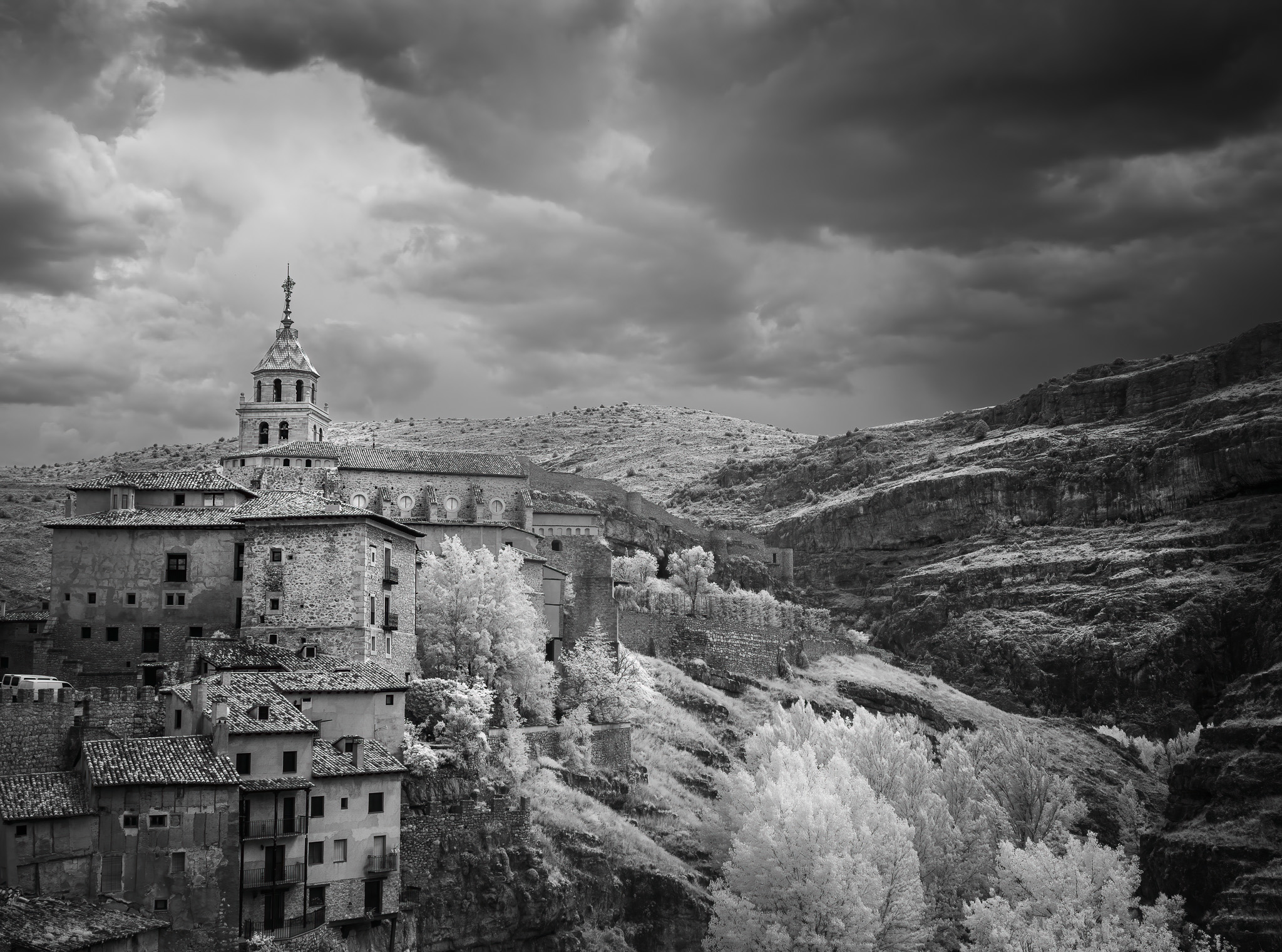
What first drew me to infrared photography was its surreal and striking look. I fell in love with the hidden world of glowing foliage and dramatic black-and-white tones invisible to the eye. But as I dove deeper, I realized that the different behavior of infrared light creates unique technical challenges.
That trusty 50mm lens you rely on for razor-sharp portraits might suddenly appear soft or show a bright spot in the center. Your favorite wide-angle landscape lens might produce severe flare. That’s why thorough lens testing is essential before you commit to infrared shooting.
In this guide, you’ll learn how to systematically test your lenses for hotspots, diffraction, and flare, so you can achieve consistently stunning results in infrared.
Why Infrared Light Changes Everything
Infrared light falls outside the visible spectrum and interacts with lenses in surprising ways. You’ll typically face three main issues:
- Hotspots: Hotspots are bright or hazy circles, usually centered in infrared images. They’re particularly common at smaller apertures and wider focal lengths — conditions typical for landscape shots. Opening the aperture or zooming in can help reduce hotspots.
- Diffraction: Diffraction is the bending and spreading of light waves when they pass through a small aperture — the smaller the aperture, the more diffraction. Both color and infrared photography are affected by diffraction, but in infrared photography, this effect becomes even more pronounced because the wavelengths are longer. Wide apertures (like ƒ/4) often deliver sharper, higher-contrast images than settings like ƒ/16, which can lead to noticeable softness and lack of contrast in infrared photos.
- Lens Flare: Lenses designed for visible light may struggle with flare in infrared. Flares are more pronounced because standard coatings are less effective in this spectrum. Learn how your lenses handle flare in infrared to position light sources creatively or minimize unwanted artifacts.
Testing for Hotspots
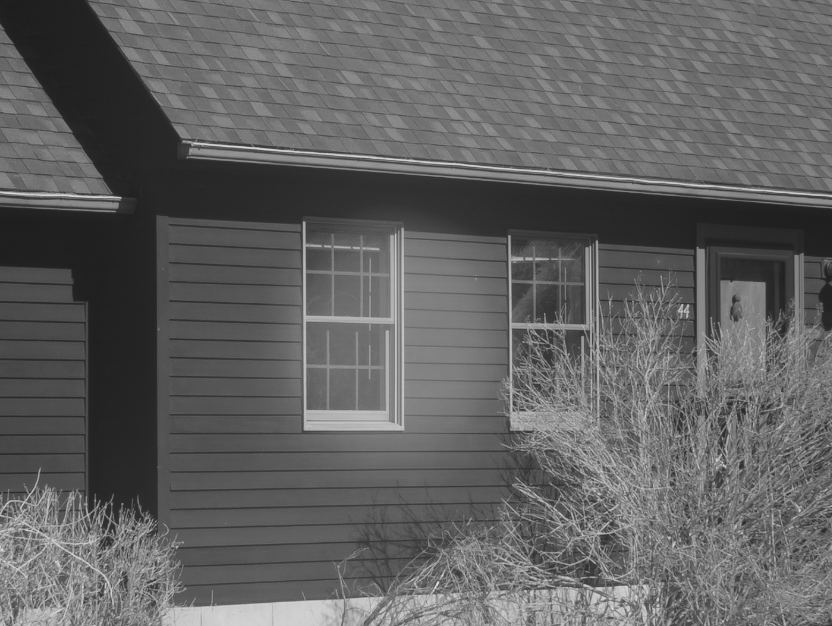
Test for hotspots in bright, even light—grass is ideal, as it shows infrared brightness clearly. Stay consistent with your framing across focal lengths for accurate comparisons.
- Gather your equipment: tripod, infrared-converted camera or filters, and all lenses to be tested.
- Choose a bright day for testing hotspots, ideally with diverse lighting and subjects.
- Set your camera to manual exposure, manual focus, and manual ISO set to your camera’s base ISO.
- Ensure critical focus — zoom in on your camera’s screen to confirm sharpness.
- Start at the widest focal length and largest aperture. Take a test shot, then close the aperture by one stop for each subsequent shot, while doubling exposure each time to maintain consistent brightness.
- For zoom lenses, plan to test at key focal lengths (e.g., for a 24-120mm lens, use 24mm, 35mm, 50mm, 70mm, and 120mm).
Evaluating Diffraction Performance

Diffraction is not dependent on focal length. It’s primarily governed by the aperture size relative to the wavelength of light and the sensor’s pixel pitch (or resolution). The longer the wavelength, the earlier diffraction effects become noticeable at smaller apertures.
- Gather your equipment: tripod, infrared-converted camera or filters, and all lenses to be tested.
- Select a subject with fine detail (e.g., building facades, fences, tree bark).
- Set your camera to manual exposure, manual focus, and manual ISO set to your camera’s base ISO.
- Double check your focus and make sure that your camera is rock-solid so that you can be sure that softness is due to diffraction, rather than some other issue.
- Start at the largest aperture. Take a test shot, then close the aperture by one stop for each subsequent shot, while doubling exposure each time to maintain consistent brightness.
Assessing Lens Flare Characteristics
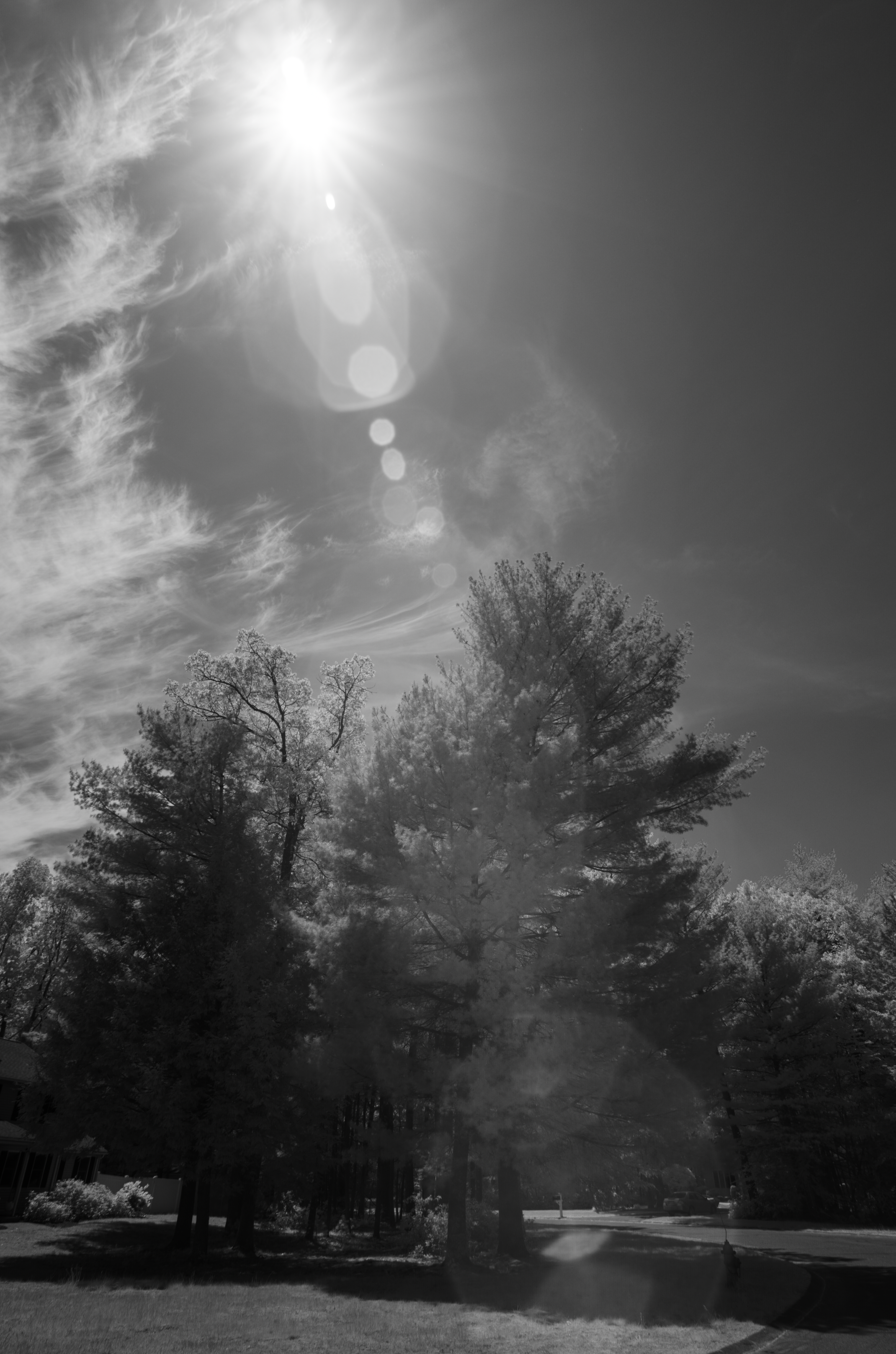
For flares, position the sun at a frame’s corner so the flare spills across the screen. Adjust your exposure so flares are clearly visible.
- Gather your equipment: tripod, infrared-converted camera or filters, and all lenses to be tested.
- Choose a clear day for testing flares.
- Set your camera to manual exposure, manual focus, and manual ISO set to your camera’s base ISO.
- Ensure critical focus — zoom in on your camera’s screen to confirm sharpness.
- Start at the widest focal length and largest aperture. Take a test shot, then close the aperture by one stop for each subsequent shot, while doubling exposure each time to maintain consistent brightness.
- For zoom lenses, plan to test at key focal lengths (e.g., for a 24-120mm lens, use 24mm, 35mm, 50mm, 70mm, and 120mm).
Analyzing Your Test Results
Import your test images with identical processing to compare fairly. Lightroom’s Compare mode helps examine images side-by-side . Take notes on sharpness, hotspots, and flare by aperture and focal length.
- Hotspots can be really obvious, but also hard to see at times. Try viewing the images at full-screen, starting with the widest aperture. Step through the images in order of increasing ƒ-stop (ƒ/4 to ƒ/5.6, for example.) While you step through the images watch the center of the screen for a loss of contrast. Stepping through the images like this will help your eye pick up the hotspot more easily.
- When inspecting your images for diffraction, start by selecting the two images at the largest and smallest apertures. This will show you where in the image it’s easiest to detect the loss of sharpness and contrast. Now you can start at the widest aperture and click thorugh with your eye on those details you previously identified.
- Flares can take over an image in infrared photography. Step through your images and note how aperture and focal length affect the flaring in your lens.
Maximizing Your Infrared Photography Success
Thorough lens testing is key to great infrared photos. Knowing how each lens behaves — with regard to hotspots, diffraction, and flare — gives you confidence and control. Results may vary widely across lenses and settings, so document your findings for reference. When the perfect infrared scene appears, you’ll be ready to capture it beautifully.
Resources
For more general information on infrared photography, read our blog post.